 Blog Kazawallet

If you have heard of digital currencies, Bitcoin was almost certainly the first name you encountered. Some view it as digital gold, others see it as the future of money, while many remain puzzled by the concept: How can something you cannot touch possess such immense value?
In this article, we will simply explain what is Bitcoin, why it was invented in the first place, and how you can engage with it as part of your daily financial reality.
Why Did Satoshi Nakamoto Invent Bitcoin?
The story didn’t begin as an abstract technological experiment, but rather as a reaction. Before 2008, the world lived at the mercy of third parties. To send money, you had to trust a bank; to preserve your wealth, you had to trust traditional monetary policies.
However, in 2008, the global financial crisis struck, and major banks—once deemed “too big to fail”—collapsed. It was then that the world realized that total reliance on centralized intermediaries was a critical weakness.
Amidst this chaos, an anonymous figure (or group) named “Satoshi Nakamoto” published a Whitepaper titled “A Peer-to-Peer Electronic Cash System.”
The idea was revolutionary yet simple: Why not eliminate the middleman entirely? Why not create a financial system managed by the people themselves, owned by no one, and impossible to stop or manipulate?
Thus, Bitcoin was born as the first currency in history to grant you full Financial Sovereignty, where you need no one’s permission to move value.
To understand the technical foundation of this independent system, read: What is Blockchain? A Simple Explanation
How Does Bitcoin Work and How is Mining Done?
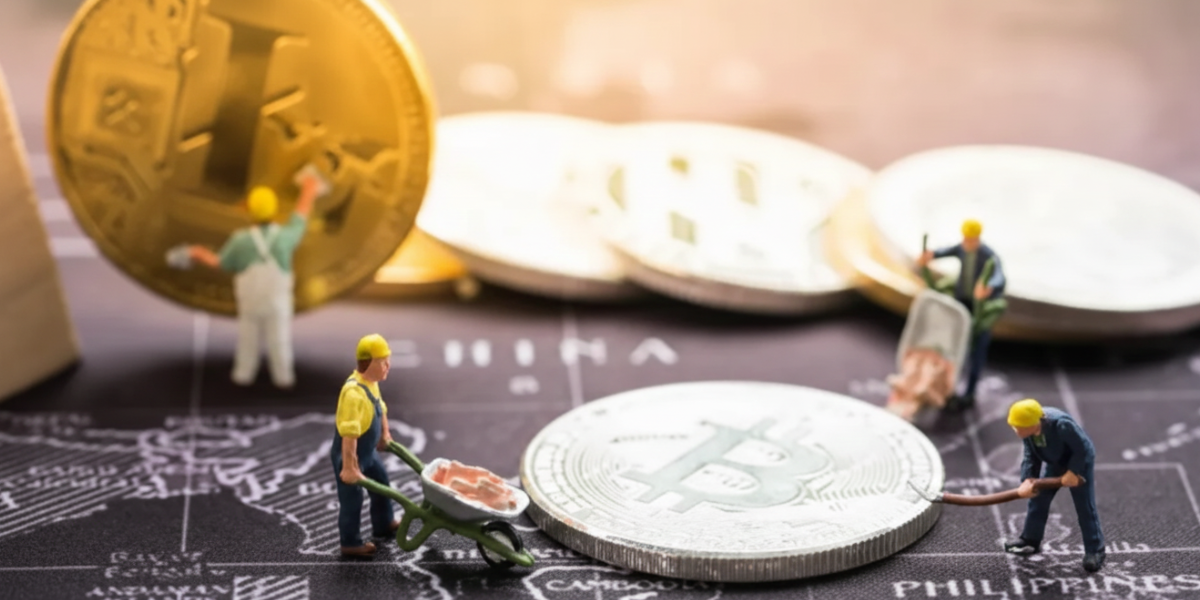
Bitcoin is not a company with employees; it is a vast network of computers around the world working in harmony to record transactions. But how is the currency issued and the network secured without a manager? The answer lies in a process called Mining.
Here is how the process works step-by-step:
- Transaction Broadcast: When someone sends Bitcoin to another person, the transaction is broadcast to the network and enters a digital waiting room.
- Block Assembly: Miners (individuals with powerful computers) group these transactions into a single Block.
- Solving the Puzzle (Proof of Work): To validate this block, miners’ computers must solve a highly complex, encrypted mathematical equation. This requires immense electrical energy and processing power, making any attempt to falsify records prohibitively expensive and nearly impossible.
- Winning the Reward: The first miner to successfully solve the puzzle announces the solution to the network. Other computers verify the solution, and the block is added to the blockchain, making the transaction final.
- Currency Issuance: As a reward for their effort and for securing the network, the winning miner receives newly created Bitcoin. This is the only way new Bitcoin is injected into the market.
(Thinking of entering this field? Read our article: What is Bitcoin Mining and How to Start?
Why Does Bitcoin Have High Value? What is the Secret of the 21 Million Cap?
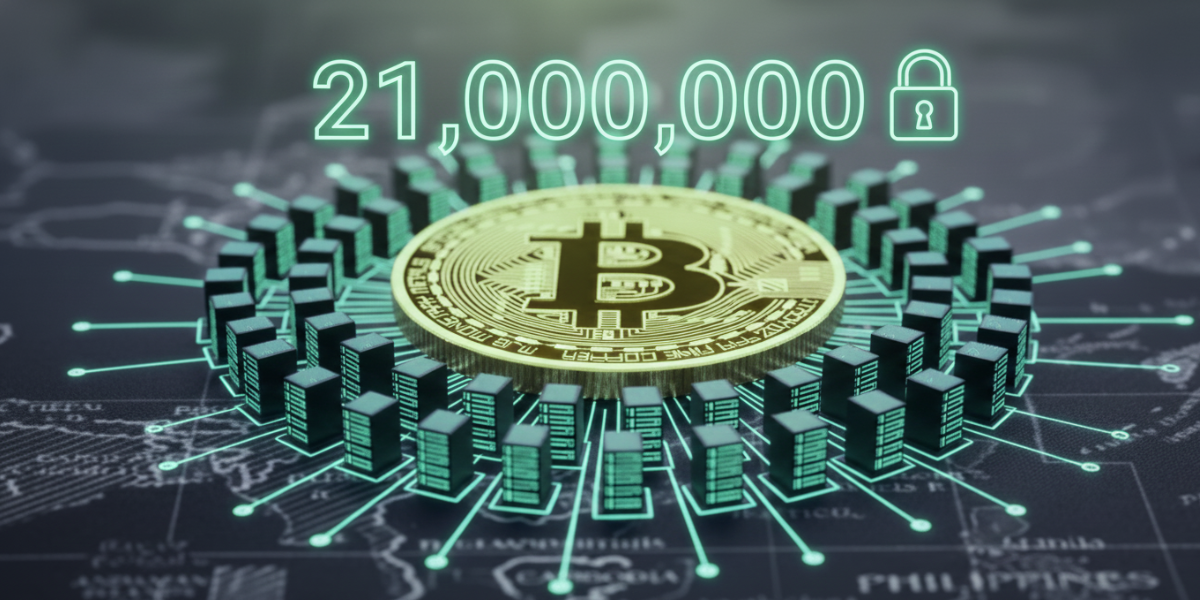
You might ask: It’s just code on the internet, so why do people pay tens of thousands to own it? The value here does not come from physical material, but from unique properties that sometimes outperform even gold:
- Absolute Scarcity: Programmatically, a hard cap for Bitcoin issuance has been set at only 21 million coins. No central bank or regulatory body can print more to fund debt, it is immune to the inflation that plagues paper (fiat) currencies. As demand grows while supply remains limited, value tends to increase.
- Decentralization and Security: You own an asset that cannot be frozen or confiscated (as long as you keep your keys safe). This feature attracts major investors seeking a safe haven for their wealth, away from the fluctuations of the traditional financial system.
What is the Difference Between Bitcoin and Ethereum? Which is Right for You?
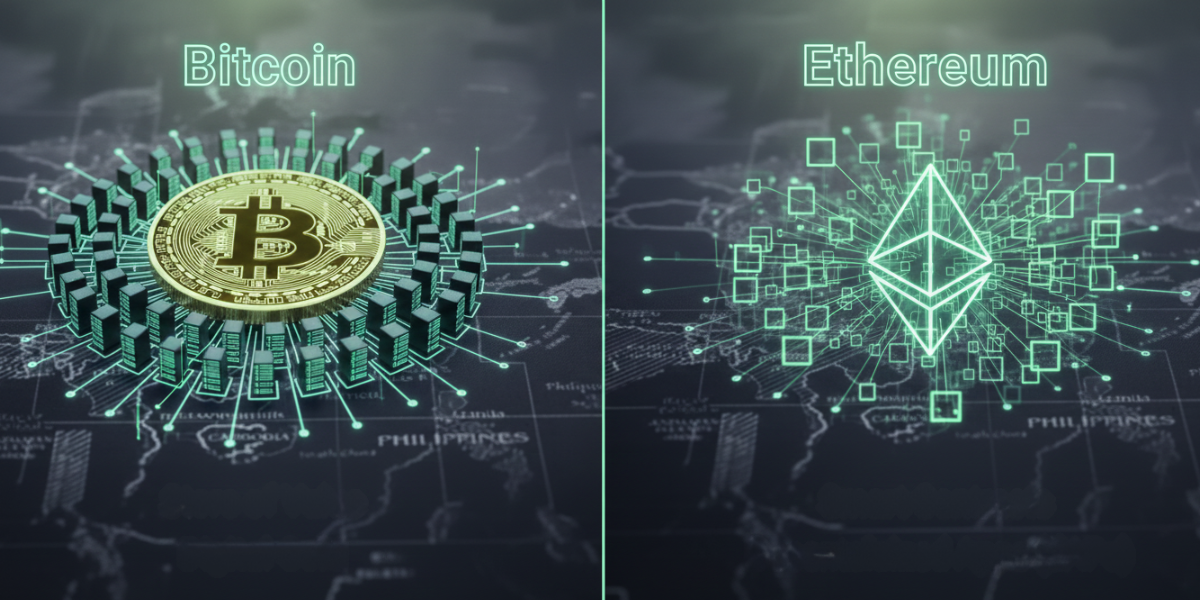
The two largest cryptocurrencies are often confused, but they serve entirely different purposes:
- Bitcoin (BTC): Its primary goal is to be a store of value and a medium of exchange. It is simple, relatively slow, but the most secure and stable. If your goal is “saving and preserving wealth,” Bitcoin is King.
- Ethereum (ETH): Ethereum is not just a currency; it is a complete software platform upon which Decentralized Apps (DApps) and Smart Contracts are built. You use Ether to pay the fees for running these applications. If you are interested in new technology, Decentralized Finance (DeFi), and NFTs, Ethereum is your playground.
For a detailed comparison before making a decision, read: Bitcoin vs. Ethereum: Which Should You Choose?
What is the Difference Between Bitcoin and Stablecoins (like USDT) in Daily Use?
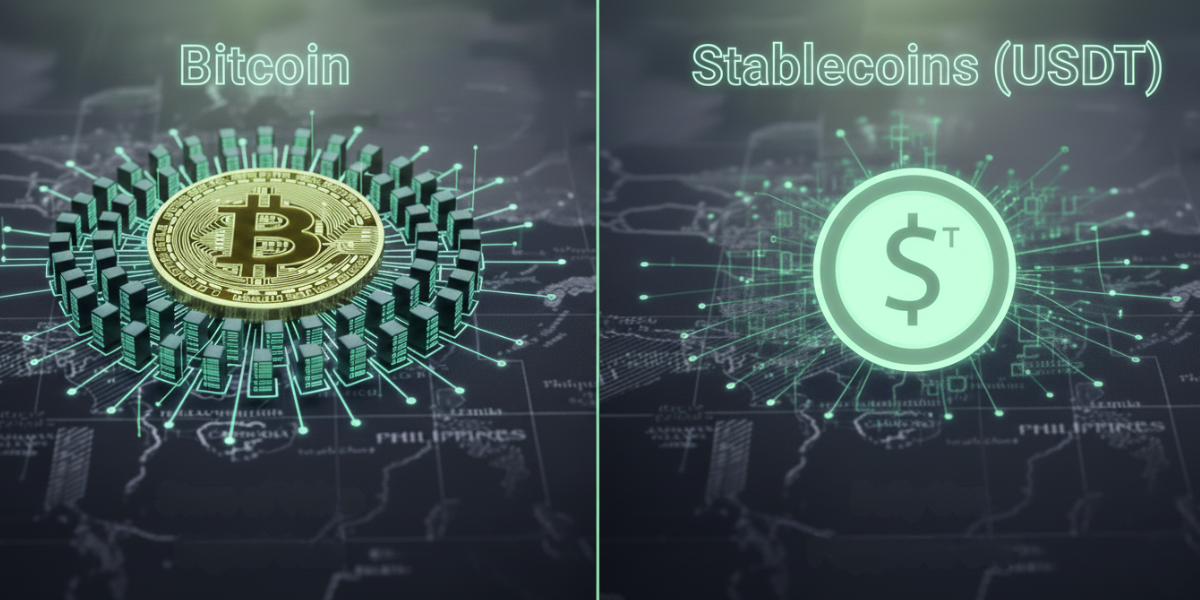
This is the common trap: when should you use one over the other?
- Bitcoin: A volatile asset. Its price might rise 5% today and drop 3% tomorrow. It is excellent for long-term investment but very poor for buying coffee (because the price of your coffee would change every minute!).
- Stablecoins (e.g., USDT): A fixed digital dollar. Its value is always pegged to $1. This is the ideal tool for daily usage, payments, and securing profits when the market dips. Read more about Bitcoin vs USDT: An In-Depth Comparative Study of Risks and Stability
At Kazawallet, we combine both: You can invest in Bitcoin, and when you want to spend, you can instantly swap it for USDT to use via the card.
Learn more about your financial tools in: What are Stablecoins and Why are They Useful?
What is Wrapped Bitcoin (WBTC)?
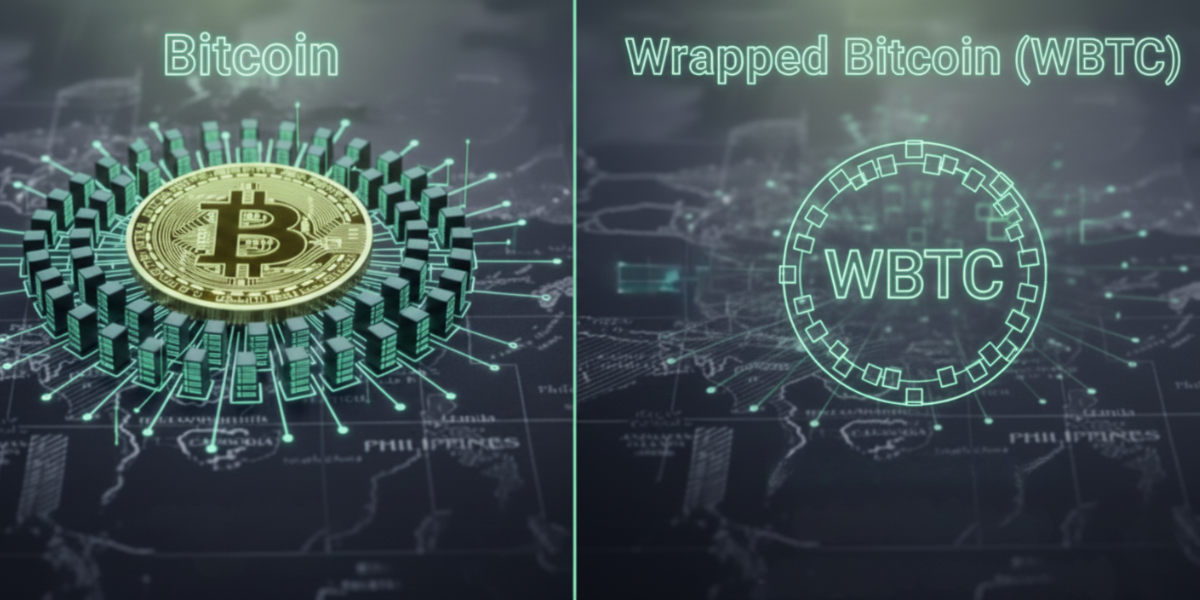
You may have heard the term “Wrapped Bitcoin” and feel confused. It is simple: Bitcoin operates on its own network and cannot natively integrate with the Ethereum network, where finance and lending applications thrive.
To solve this problem, Wrapped Bitcoin (WBTC) was invented.
- The Concept: You “freeze” real Bitcoin in a vault, and in exchange, WBTC is issued on the Ethereum network with the exact same value (1 BTC = 1 WBTC).
- The Benefit: You can now use the value of your Bitcoin in lending apps and smart contracts on Ethereum without selling your original asset.
Comparison: Bitcoin vs. Other Currencies
| Feature | Bitcoin (BTC) | Ethereum (ETH) | Stablecoins (e.g., USDT) |
|---|---|---|---|
| Primary Use | Store of Value / Investment Asset | Platform for Smart Contracts & Apps | Daily Payments & Short-term Storage |
| Price Volatility | High | High | Very Low (Pegged to ~$1) |
| Supply | Limited (21 Million) | Unlimited (Different mechanism) | Depends on the issuer |
| Best For | Long-term Savers | Users of DeFi & DApps | Those seeking stability & daily utility |
How Can You Use Bitcoin in Your Practical Life?
Beyond screens and charts, practical uses for Bitcoin are growing day by day:
- Store of Value Outside Banks: In times of economic crisis, Bitcoin acts as a personal vault for which only you hold the key.
- Massive Transfers: You can move millions of dollars anywhere in the world with minimal fees and in minutes, without questions or complex banking procedures. For example, an international transfer of $1,000 equivalent in Bitcoin might cost you less than a dollar in fees, whereas a bank might take $20–$50 for the same transaction, plus time delays.
- Daily Spending via Kazawallet: The biggest challenge has always been the difficulty of paying with Bitcoin at regular stores. At Kazawallet, we solved this dilemma:
- Deposit Bitcoin into Kazawallet.
- When you want to buy something, instantly swap it to USDT inside the app to lock in the value.
- Use the balance via the Kazawallet Card to purchase your needs anywhere that accepts Visa.
Advice: Bitcoin is a highly volatile asset; its price can rise or fall sharply in short periods. The golden rule is: Never invest money you cannot afford to lose, and always ensure you do your own research before making any financial decision.
Frequently Asked Questions (FAQ)
What is Bitcoin in simple terms?
Bitcoin is the world’s first decentralized digital currency, operating without a central bank or manager. It is a free financial system that allows you to send and receive money directly (peer-to-peer) or store value securely online.
Is Bitcoin legal?
In most countries, owning and trading Bitcoin is permitted as a digital asset. Some countries place restrictions on using it as a direct payment currency, but trading and investing are accessible and regulated on most platforms.
Who is Satoshi Nakamoto?
This is the pseudonym of Bitcoin’s creator. To this day, no one knows their true identity, whether it is a single person or a group. Their disappearance was necessary to ensure that Bitcoin has no owner, making it belong to everyone.
What happens if I lose my wallet key?
Unfortunately, if you lose the Seed Phrase (recovery words) to your private wallet, no entity in the world can recover your funds. Therefore, it is always recommended to use platforms that offer a balance between security and ease of recovery, like Kazawallet, or to store your keys in an extremely secure location.
Can Bitcoin be counterfeited?
Technically impossible. The blockchain network verifies the validity of every coin and every transaction via millions of devices around the world, making counterfeiting unfeasible.
What is the minimum amount I can buy of Bitcoin?
You are not required to buy a whole Bitcoin (which can be expensive). Bitcoin is divisible up to 8 decimal places (called Satoshis). You can start by buying as little as $10 worth of Bitcoin.
In Conclusion: Money Evolves, Don’t Get Left Behind!
The story of Bitcoin has become a financial reality asserting itself globally. It is simply the natural evolution of money in the internet age; just as we moved from gold to paper, and from paper to plastic cards, we are now moving to digital assets.
More important than watching the price go up and down is understanding the philosophy behind it: Having the Choice!
The choice to preserve the value of your hard work away from inflation, and the choice to move your money with total freedom.
Do not let the fear of the new prevent you from benefiting from it; start small, learn the basics, and be a part of this financial shift rather than watching it from the sidelines.