What is Bitcoin? Bitcoin (BTC) is the world's first decentralized digital currency, allowing you to send and receive money without a banking intermediary.
It features a strict scarcity model (only 21 million coins), making it digital gold and a store of value. You can invest for long-term savings or use Kazawallet to swap it for stablecoins and fund your Visa card for daily purchases.
Why Did Satoshi Nakamoto Invent Bitcoin in the First Place?
The story didn't begin as mere technology, but as a financial reaction. Before 2008, the world was at the mercy of "third parties" (banks).
With the collapse of the global financial system at that time, the world realized that total reliance on central intermediaries was a dangerous point of failure.
In the midst of this chaos, Satoshi Nakamoto published the white paper that laid the foundation for a financial system managed by the people themselves.
Bitcoin was created to give you full financial sovereignty; no one owns it, and no one can stop or manipulate it.
To understand the technical foundation of this independent system, read: What is Blockchain? A Simplified Explanation
How Does Bitcoin Work and What is Mining?
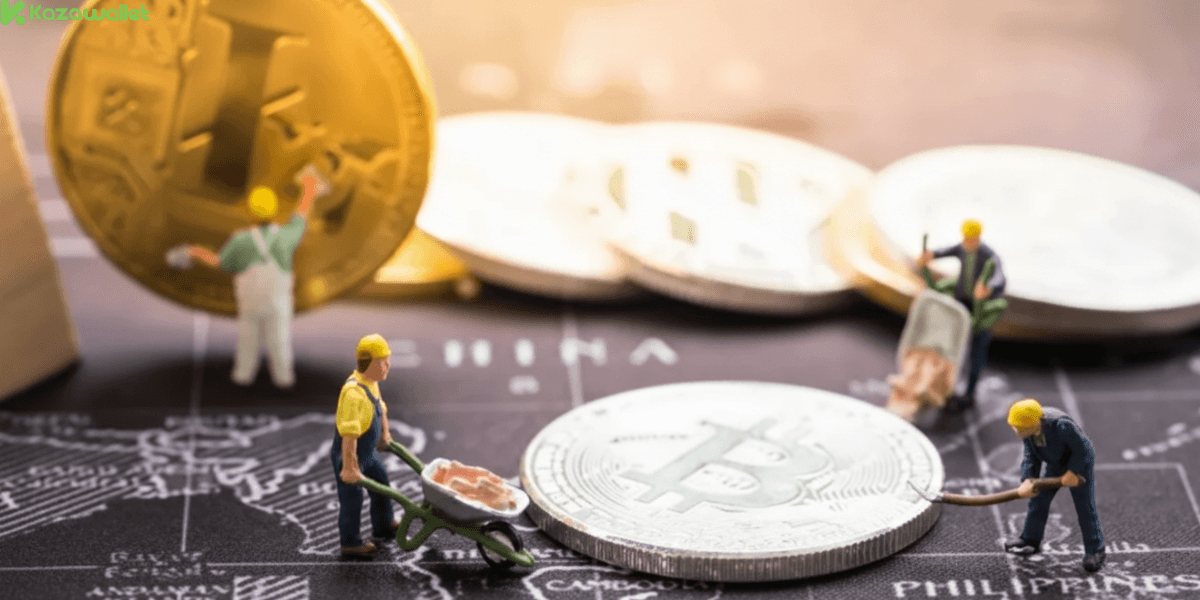
Bitcoin is a massive network of computers working together to record and protect transactions through a process called Mining, which works as follows:
Broadcasting the Transaction: A transfer request is sent and enters a digital "waiting room."
Assembling the Block: Miners bundle these transactions into a single block.
Proof of Work: Devices solve a highly complex mathematical equation to secure the block, requiring immense energy that prevents fraud.
Adding a Block: The first to solve the puzzle adds the block to the Blockchain.
The reward: The miner receives newly minted Bitcoins as a prize, and this is the only way new Bitcoins enter the market.
Thinking of entering this field? Read: What is Bitcoin Mining and How to Start?
Why Does Bitcoin Have Such a High Value? The Secret of 21 Million
Value here does not come from a physical material, but from unique programmed characteristics:
Absolute Scarcity: Programmatically, there will never be more than 21 million coins, protecting it from inflation (unlike paper currencies printed without limits).
Decentralization: You own an asset that cannot be frozen or confiscated, as long as you keep your private keys.
Bitcoin vs. Ethereum: Which is Right for You?
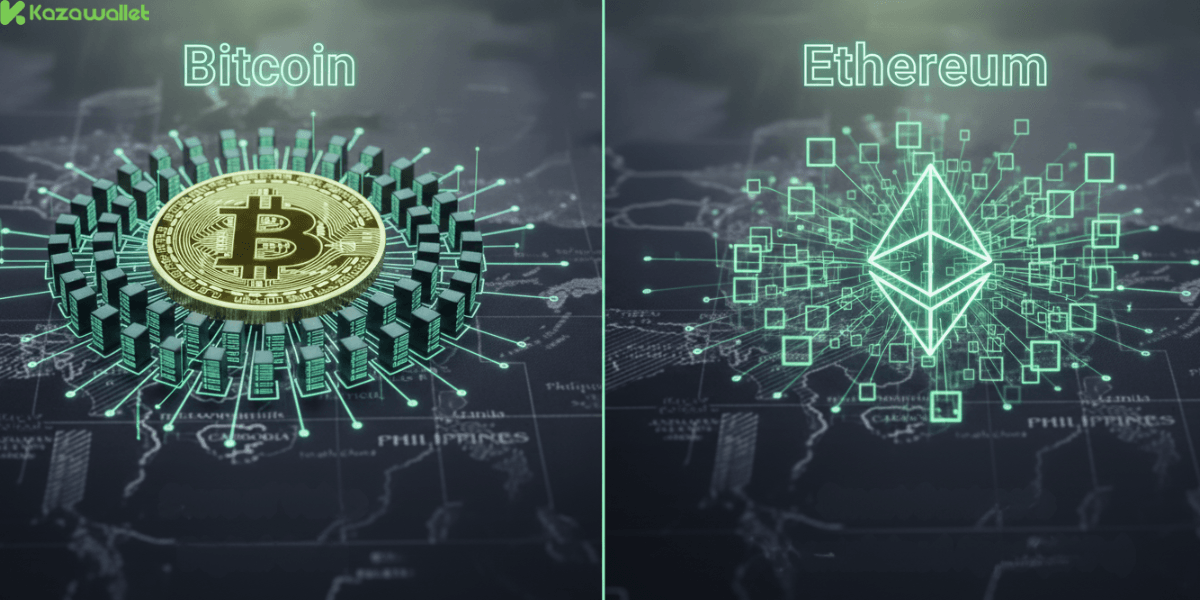
The two largest coins are often confused, but they serve entirely different purposes:
Bitcoin (BTC): Its main goal is to be a store of value and a means of payment. It is simple, relatively slow, but the most secure and stable. If your goal is savings and wealth preservation," Bitcoin is king.
Ethereum (ETH): This is a full software platform for Decentralized Applications (DApps) and Smart Contracts. You can use ETH to pay for operating these apps. If you are interested in DeFi and NFTs, Ethereum is your playground.
For a detailed comparison, read: Bitcoin vs. Ethereum: Which One to Choose?
Bitcoin vs. Stablecoins (like USDT) in Daily Use
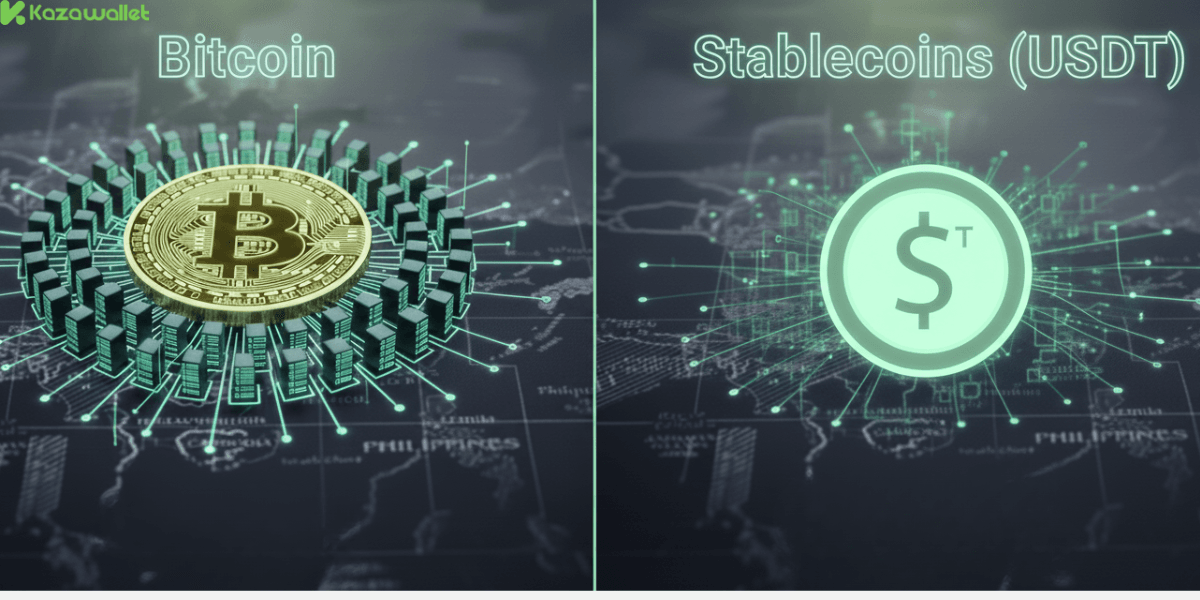
When do you use each?
Bitcoin: A volatile asset. Excellent for long-term investment, but less ideal for buying coffee (as the price of your coffee could change every minute!).
Stablecoins (e.g., USDT): A fixed digital dollar (always $1). It is the perfect tool for daily spending and protecting your profits when the market dips.
In Kazawallet, we merge both: Invest in Bitcoin, and when you want to spend, swap it instantly to USDT to use via your card.
Learn more in: What are Stablecoins and Why are They Useful?
Digital Asset Comparison: BTC vs. Others
| Feature | Bitcoin (BTC) | Ethereum (ETH) | Stablecoins (USDT) |
| Primary Use | Store of Value / Digital Gold | Smart Contract Platform | Daily Payments / Stability |
| Volatility | High (Investment Asset) | High (Tech Asset) | Very Low (Always $1) |
| Best For | Long-term Savings | Developers & DeFi Apps | Daily Spending / Avoiding Dips |
What is Wrapped Bitcoin (WBTC)?
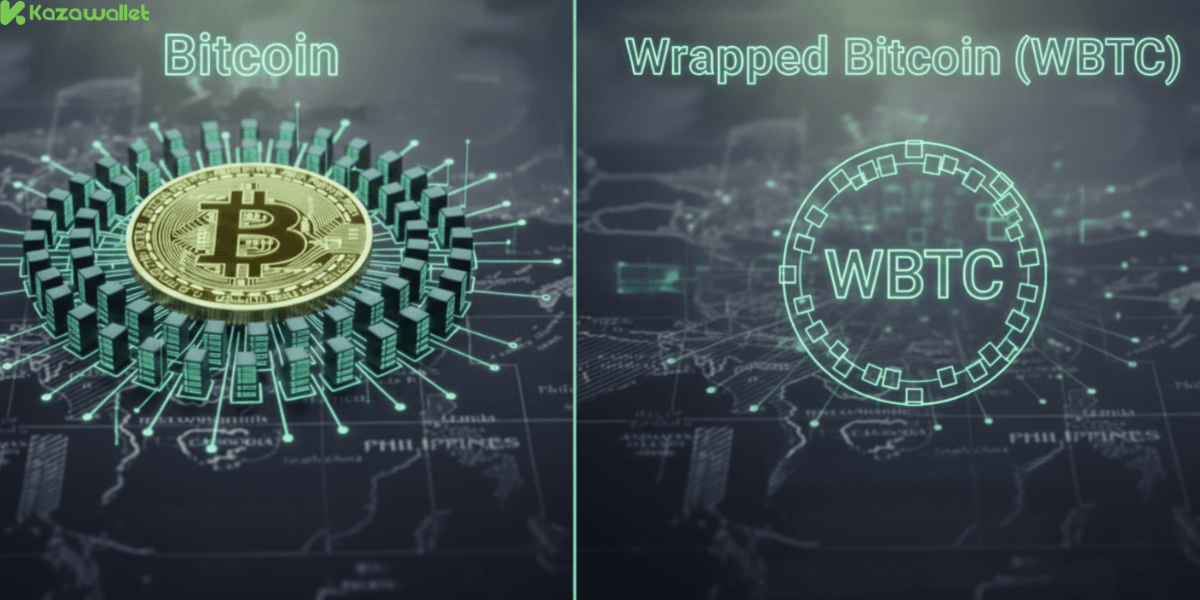
Bitcoin lives on its own network and cannot natively move to the Ethereum network. To solve this, Wrapped Bitcoin (WBTC) was created.
The Idea: You lock a real Bitcoin in a vault, and in return, a WBTC token is issued on the Ethereum network with the exact same value (1 BTC = 1 WBTC).
The Benefit: You can now use your Bitcoin’s value in Ethereum’s lending and borrowing apps without selling it.
How to Use Bitcoin in Real Life via Kazawallet
Kazawallet solves the challenges of price volatility and direct payment difficulties by providing a financial bridge:
Wealth Preservation: Buy and save Bitcoin as your personal vault away from banking instability.
International Transfers: Move large sums globally for tiny fees (often under $1) and much faster than traditional banks.
Smart Spending: Deposit Bitcoin into Kazawallet, swap it instantly to USDT to lock in its value, and use it via the Kazawallet Card at any merchant that accepts Visa.
Start here: Cryptocurrency Guide for Beginners
Pro Tip: Bitcoin is a highly volatile asset; its price can rise or fall sharply in short periods. The golden rule: Never invest money you cannot afford to lose, and always do your own research.
Frequently Asked Questions (FAQ)
What is Bitcoin in short?
A decentralized peer-to-peer electronic cash system that allows you to store and move value globally without banks or intermediaries.
Is Bitcoin legal?
In most countries, owning and trading Bitcoin as a digital asset is legal. While some countries restrict its use as a direct payment currency, investment is available and regulated on most platforms.
Who is Satoshi Nakamoto?
The pseudonym used by the creator(s) of Bitcoin. To this day, the true identity remains unknown. This anonymity ensures that no single entity "owns" Bitcoin.
What happens if I lose my wallet keys?
If you lose your Seed Phrase, no one in the world can recover your funds. It is recommended to use platforms that balance security and ease of recovery like Kazawallet.
Can Bitcoin be forged?
Technically impossible. The blockchain verifies every coin and transaction across millions of devices, making fraud non-viable.
What is the minimum amount I can buy?
You don't have to buy a whole Bitcoin. You can buy fractions called Satoshi. You can start with as little as $10.
Conclusion: Money is Evolving, Don't Be Late!
The story of Bitcoin is the natural evolution of money in the internet age; just as we moved from gold to paper, and from paper to plastic cards, we are now moving to digital assets.
The most important thing is having the choice: the choice to preserve the value of your effort against inflation, and the choice to move your money with total freedom.