Circle, the company behind USDC, is building its own blockchain network called Arc blockchain, designed to be a home for digital money movement.
The idea is simple: instead of sending USDC through crowded public networks with unpredictable fees and inconsistent confirmation times, Arc is built so that fees are paid in USDC itself, and transactions settle in under a second, almost instantly.
The network has been in public testnet since late 2025, and the plan is to move to the first version of the live network during summer 2026, backed by companies like Visa, BlackRock, and HSBC.
Why does a technical topic like this even matter to you?
You probably hear the name USDC every day and use it to send money or to keep part of your savings safe from local currency swings.
But you've probably never stopped to ask: how does this currency actually move from one wallet to another? The answer is that it travels across a blockchain network, the same way a text message needs a phone network to get from one device to another.
For years, USDC relied mainly on public networks that weren't built specifically for it, like Ethereum and others.
That meant the fees for sending your stablecoin would rise and fall depending on how busy the network was with unrelated projects, and sometimes confirmations simply took longer than they should.
Now, the company that issues USDC has decided to build its own network instead. This shift could reshape the future of USDC, and your everyday experience with it, whether you're sending money to your family or spending from your digital balance.
What is the Arc blockchain, and how does it relate to USDC?
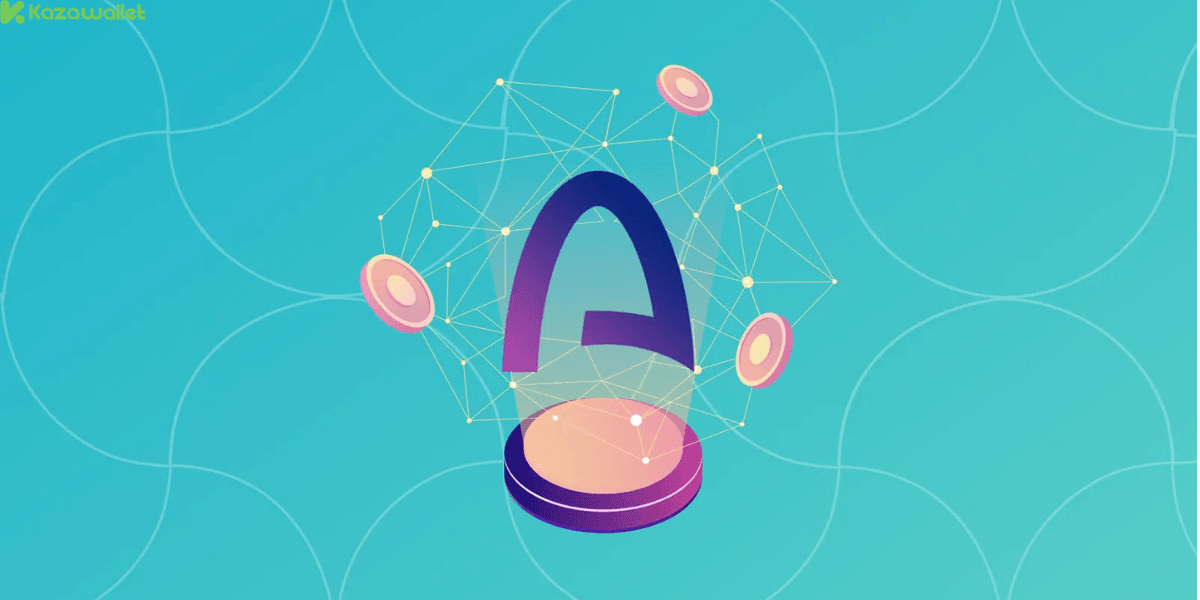
Arc is a Layer 1 blockchain network, announced by Circle in August 2025, described as an "economic operating system" built for the movement of digital money online.
On most existing networks, sending money means you first have to buy a completely different, price-volatile coin just to pay the transfer fee. Arc's biggest advantage is that you pay that fee using USDC itself.
In other words, if you want to send USDC, the fee gets deducted in USDC (which tracks the dollar). That change saves you the hassle of buying extra coins and makes the cost of a transfer clear, stable, and priced in dollars, without any sudden surprises tied to market swings.
Since October 28, 2025, Arc blockchain public testnet has been open to developers, joined by more than a hundred financial and tech companies for testing, including Visa, BlackRock, HSBC, Goldman Sachs, and Amazon Web Services. The actual launch is still planned for summer 2026.
Why did Circle need its own network instead of relying on existing ones?
The obvious question here is: aren't there already plenty of blockchain networks that work just fine? The answer is that those networks were built for general purposes, carrying thousands of different projects on top of them, from games to decentralized apps.
When any one of those projects gets busy, everyone feels it through higher fees and slower confirmations, even if all you're trying to do is send a simple transfer.
To simplify the idea, picture old transfer systems as a highway that gets jammed with traffic during rush hour, slowing your trip down and driving up its cost.
Arc blockchain is being built to be a set of new, purpose-built lanes, designed specifically to move data and money far more efficiently.
Circle built this infrastructure to be flexible enough to handle millions of transactions without delay. What that means for you is that sending and receiving USDC gains more stability and reliability, lowering the odds of a transfer getting stuck or an unexpected network fee catching you off guard.
According to Circle, this focus lets the network offer near-instant confirmation, usually under a second, with deterministic finality that means a transaction is confirmed the moment it's processed, rather than sitting in a long, uncertain queue the way it might on other networks.
The network also builds currency conversion (FX) tools directly into its structure, which matters especially if you regularly deal with more than one currency.
How does Arc blockchain work?
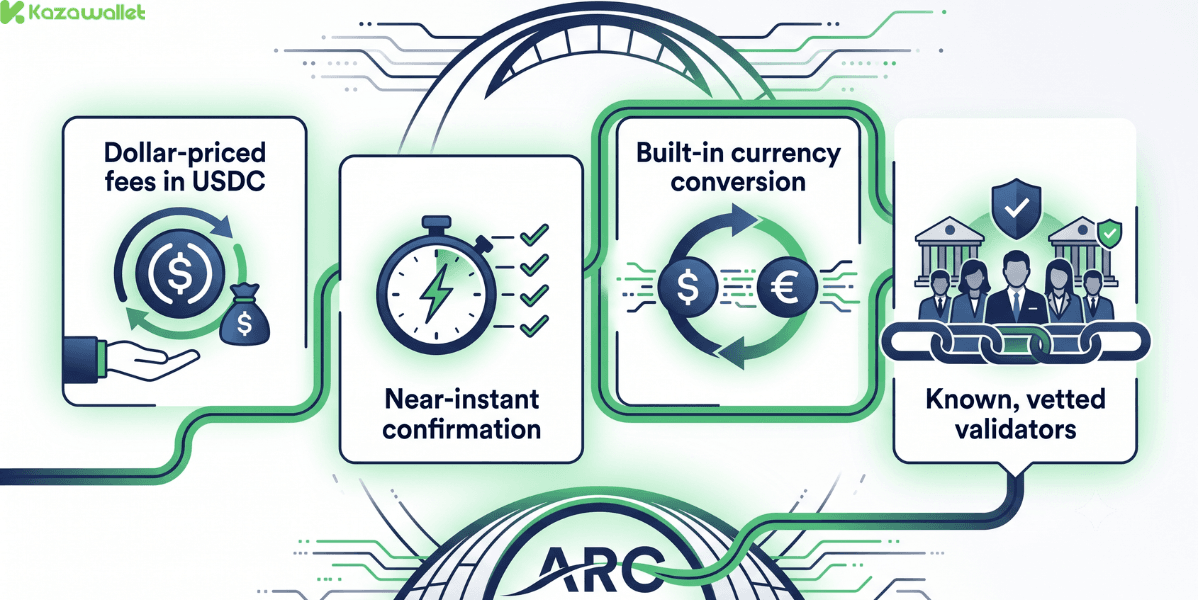
In practice, that philosophy translates into a set of concrete technical features. Here's what stands out most about Arc blockchain:
- Dollar-priced fees, paid in USDC itself: no need to hold a separate cryptocurrency just to cover transaction costs.
- Near-instant confirmation: the moment you send a payment, it's treated as final within a fraction of a second, rather than sitting pending.
- Built-in currency conversion: the network is designed to swap currencies automatically and quickly from within the system itself, without needing middleman platforms or extra steps.
- Known, vetted validators: instead of relying entirely on anonymous node operators, transactions are confirmed through a network of well-known, established financial institutions, which raises the bar on security and reliability.
These features are aimed first and foremost at companies, financial institutions, and banks looking to settle large-scale payments.
But the impact on everyday users shows up gradually, as more platforms and digital wallets begin building this new infrastructure into their own services.
What does this mean if you send money to your family or hold savings in stablecoins?
If you use USDC to send money to your family or to keep part of your savings out of reach of local exchange-rate swings, the expected benefits of the Arc network come down to two main points.
First, clearer costs. Instead of being caught off guard by a network fee spike caused by congestion that has nothing to do with you, the cost becomes directly tied to the value of USDC you're moving, which makes it much easier to plan financially, especially when every bit of the transfer matters to the person receiving it.
Second, faster settlement. Since the network is designed for near-instant confirmation, the wait for a transaction to clear can end up being far shorter than on public networks, where transfers can take minutes or longer during busy periods.
That said, it's worth noting that these benefits are still tied to the network's ongoing development, and whether they reach everyday users depends on platforms and digital wallets choosing to build this infrastructure into their services once the main network is fully live.
Regardless of the network, how do you spend or exchange your USDC balance today?
All of this infrastructure development ultimately serves one goal: making digital money move more easily and fit more naturally into your everyday life.
And while Circle works on faster ways to move USDC between wallets and institutions, the practical question that matters to you as an everyday user is: how do you make use of your stablecoin balance right now, without waiting for these developments to finish?
That's where a platform like Kazawallet comes in, giving you a practical way to handle your digital currency balances today.
Through Kazawallet, you can exchange your balance directly to US dollars, Syrian pounds, or other currencies, and withdraw it through more than one method that fits your needs.
Or you can exchange it directly to dollars or USDT and load a Kazawallet Visa card with it, to spend anywhere Visa cards are accepted online, just like a regular bank card, all without waiting periods or extra verification steps that hold up your money.
That means you don't have to wait for new networks like Arc to be completed in order to actually put your stablecoins to use; the practical tools to turn your digital balance into cash or real spending power are already available to you.
Frequently Asked Questions
What happens to the USDC I already hold on other networks, like Ethereum or Solana?
Nothing changes. USDC will keep working exactly as it does today across all existing public blockchain networks. Arc is an additional, specialized route that Circle is opening up, not a replacement that shuts down the others. You can always choose whichever network suits you best, based on what your wallet supports.
Will Arc blockchain change the value of USDC?
No. USDC's value is tied to the US dollar and its reserves, regardless of which network it moves through. What changes is the speed and cost of moving the currency, not its nature as a stablecoin.
Can I send other stablecoins, like USDT, over the Arc network?
In this first phase, the focus is entirely on Circle's own currencies. Arc is designed as a dedicated environment for USDC and the network's new token (ARC).
That said, the network supports advanced cross-chain bridging protocols, which could open the door to asset exchange down the line.
But if you're looking for full flexibility to exchange and spend your USDT balance today, platforms like Kazawallet already give you that solution directly, with no complications, regardless of which network your currency runs on.
Will I need a new wallet to use Arc?
That depends on the wallets and platforms you use, and whether they choose to add support for the Arc network once it officially launches. Until service providers share clearer details, this can't be confirmed either way.
Does Kazawallet support the Arc network right now?
Arc is still a network under development and hasn't officially launched yet. But Kazawallet already lets you manage your stablecoin balance as USDT today, through a direct swap and a virtual Visa card, regardless of which network those coins are built on.
In Conclusion
The Arc network marks a notable step in the evolution of stablecoins, with Circle building purpose-made infrastructure to make USDC move faster and with more financial predictability.
There's still a long road ahead before this network reaches everyday users, but it reflects a broader shift in digital finance toward infrastructure built specifically for stablecoins, rather than relying on general-purpose public networks.
And until that journey is complete, using your digital currency day to day, from transferring it to spending it, remains something you can already do practically and reliably.