Visa has transitioned from simply accepting crypto payments to building the infrastructure for issuing and managing stablecoins itself through its new platform (Visa Stablecoin Platform), backed by a new currency called Open USD ($OUSD) in collaboration with tech and financial giants.
This development opens the door to a three-way competition over the digital dollar among crypto companies, traditional banks, and global payment networks.
For years, Visa stood at the boundaries of linking crypto cards to merchants to facilitate spending.
This move raises an important question: Are we witnessing a restructuring of how digital dollars are controlled? And what does this mean for a user looking for a safe and fast way to manage their money?
What is the Visa Stablecoin Platform & What is the Story Behind Open USD?
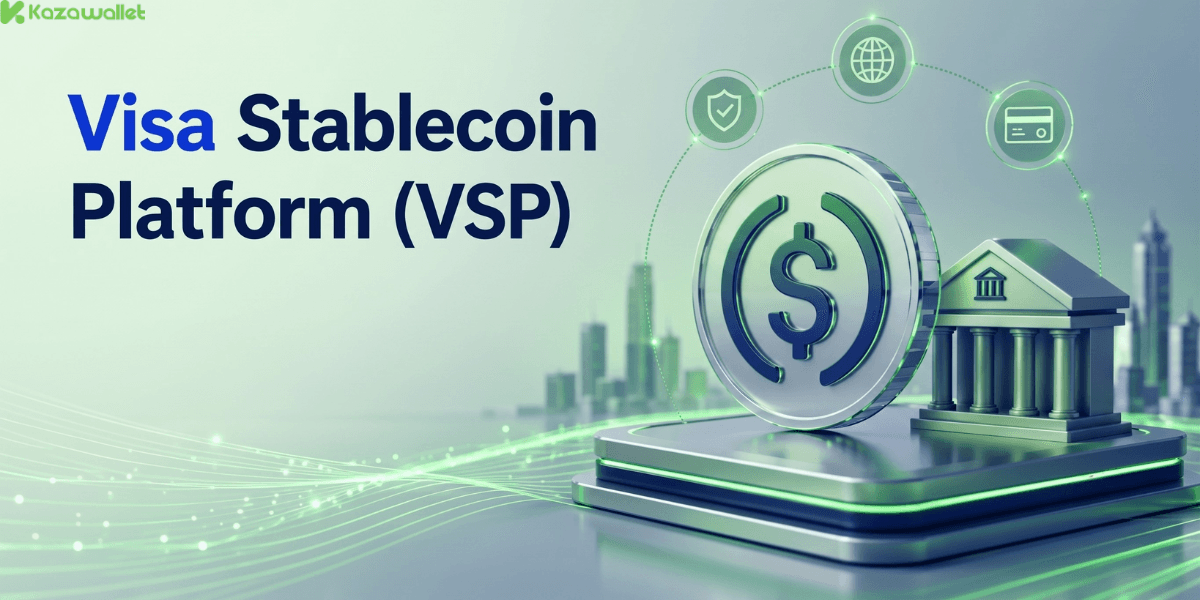
In mid-July, Visa announced the beta launch of the Visa Stablecoin Platform (VSP). The simple idea is to provide an integrated environment that allows banks and fintech companies to issue, transfer, and manage stablecoins without needing to build complex blockchain systems from scratch.
The platform includes tools for treasury management, bank account integration, and payment settlement. Interestingly, the platform did not start by exclusively relying on popular coins like USDC or USDT; instead, it launched by introducing a new stablecoin called Open USD ($OUSD).
OpenUSD is the result of a massive consortium called the Open Standard, which includes over 140 global institutions, including Visa, Mastercard, BlackRock, Coinbase, and Google.
This currency stands out by eliminating minting and redemption fees, while sharing reserve yields with partners, giving Visa a new commercial model that places it at the heart of digital currency management.
The Three-Way Competition: Who Will Rule the Digital Dollar Market?

With these developments, the stablecoin market, which has surpassed $300 billion in size, is forming around three main competing models:
Crypto-Native Currencies: Led by companies like Tether (creator of USDT) and Circle (creator of USDC), which have widespread reach and deep trust among the crypto audience and traders.
Tokenized Bank Deposits: These are checking accounts that traditional banks seek to convert into digital tokens on blockchain networks to keep funds within their banking umbrella.
Payment-Network Stablecoins: The model led by Visa through the VSP platform and Open USD, leveraging its massive network that connects around 15,000 financial institutions and over 200 million merchants, having already reached about $7 billion in annualized stablecoin settlement.
This competition will not easily end with a single winner; rather, it will create a multi-option financial environment where the success of each currency is determined by liquidity volume, ease of redemption, and regulatory compliance.
Why Are Visa and Banks Moving Toward This System Now?
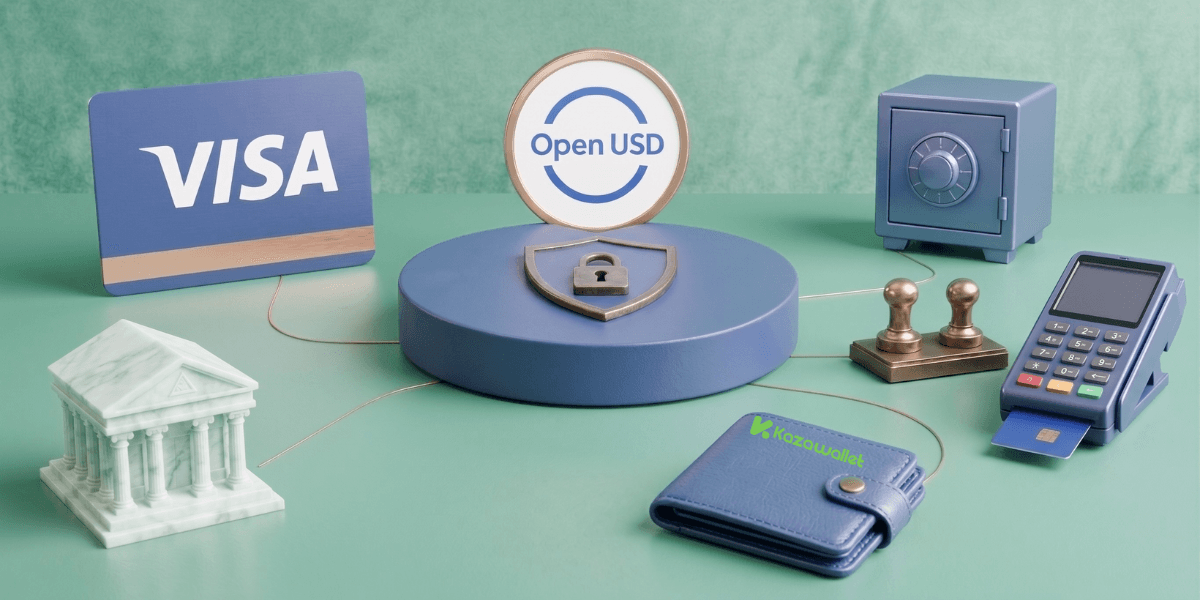
Why do banks care about moving our checking accounts to the blockchain when stablecoins already handle fast transfers? The goal is to merge technical efficiency with banking trust.
For decades, banks have relied on centralized transfer systems that take days to settle cross-border transactions and incur high fees.
By integrating tokenized deposits via Visa’s platform, banks aim to:
Accelerate International Payments: Instead of passing through multiple intermediaries, large transactions between banks can be settled almost instantly.
Program Money via Smart Contracts: Payment orders can be created to execute automatically when certain commercial conditions are met, reducing manual intervention.
Maintain Their Financial Role: Traditional financial institutions do not want to remain bystanders while hundreds of billions of dollars move outside their systems across open crypto networks.
How Does This Shift Affect Your Daily Use of Money?
Although platforms like VSP are primarily built to serve institutions and corporations, their ultimate impact benefits the everyday user.
Increased reliance on the digital dollar necessarily means more flexible and faster payment and financial clearing options across all commercial transactions.
However, the real challenge for individuals lies not only in how these digital currencies are issued but in how to spend and practically utilize them to cover expenses, shop online, and secure family needs.
Daily Spending via the Kazawallet Virtual Visa Card

While global financial companies and institutions race to build their digital currency infrastructure, your need as a user remains focused on simplifying your daily transactions and securing a flexible way to utilize your digital balance.
This is where comprehensive fintech platforms like Kazawallet come in to serve as the direct bridge connecting these advanced digital assets with practical application in your life.
Through Kazawallet , you can easily deposit various cryptocurrencies and perform a direct, instantaneous exchange to USDT or USD without any complications or waiting procedures.
This direct exchange opens up broad horizons for utilizing your digital money in a way that serves you:
Topping up the Kazawallet Virtual Card: You can use its details to buy necessities and pay for store subscriptions and online electronic services freely.
Sending Family Support and Withdrawals: By making quick transfers or receiving cash through the network of authorized Kazawallet agents located in multiple areas, or via exchange companies like Al-Ittihad, Doviz, Al-Haram, and Al-Fouad.
Frequently Asked Questions (FAQs)
What is the VSP platform in simple terms?
It is a technical system developed by Visa to help banks and financial companies easily issue and manage their own stablecoins or deal with Open USD without needing to develop their own cryptography systems.
What is the difference between a stablecoin and a tokenized deposit?
A stablecoin is often issued by specialized fintech companies (like the issuers of USDT) and is backed by cash reserves. A tokenized deposit, on the other hand, is a direct obligation from the bank to you, representing a digital version of your checking account balance, but it operates and moves across a blockchain network.
Will Open USD eliminate stablecoins like USDT or USDC?
No, the market is expanding to accommodate several models. USDT and USDC have massive liquidity and deep penetration in trading and decentralized finance (DeFi), while Open USD and the Visa Stablecoin Platform focus on institutions and banks. Having multiple options strengthens the market and does not cancel out existing assets.
Can I pay with digital currencies directly on global stores?
So far, major global platforms do not accept direct payments with digital currencies. The only practical method is to use a virtual payment card, like the Kazawallet card, which you fund with your balance and use just like any traditional bank card to bypass this obstacle.
Is there a waiting period when exchanging my digital balances to spend them via Kazawallet?
Not at all. The platform is designed to allow you a direct exchange to USDT and to top up your virtual card instantly, without any checking periods or liquidation times, so you can access your funds momentarily.
Conclusion
The competition among banks, crypto companies, and payment networks contributes to making the cross-border movement of money more efficient and faster.
Until these banking technologies reach our phones, the most important thing is to have reliable tools that make your life easier right now.
Whether you want to preserve your savings or shop online, the instant solutions and direct exchange available to you today make using your digital money an easy, useful, and completely hassle-free experience.