Open any crypto app and glance at the price of Bitcoin or any other coin. Reopen the app just one minute later, and you will notice the price has changed again, often multiple times.
This is completely different from the price of a loaf of bread at the supermarket, which might stay the same for weeks. Why do Cryptocurrency Prices behave this way?
The simple answer is that the price of a cryptocurrency is not a fixed number decided by any single authority; rather, it is the direct outcome of a live, nonstop auction taking place between millions of people around the world.
In this article, we explore how crypto prices are determined in plain language and why the market never truly sleeps.
Understanding Cryptocurrency Prices: What Determines Market Value at Any Given Moment?
Imagine a bustling local marketplace where sellers offer their goods at different rates and buyers state what they are willing to pay. The moment a seller and a buyer agree on a price, a deal is struck instantly.
This is exactly what happens across crypto markets, just electronically and at speeds far beyond human tracking.
Every exchange maintains a live record called an Order Book, divided into two sections:
Bids (Buy Orders): The prices buyers are willing to pay.
Asks (Sell Orders): The prices sellers are willing to accept.
When a buy price matches a sell price, the transaction executes automatically in a fraction of a second. The price on your screen updates immediately to reflect the most recent trade.
Because thousands, even millions, of these transactions occur every minute across platforms globally, the price looks like it moves on its own, when it is actually just mirroring what people agree on from one moment to the next.
Why Does the Crypto Market Never Stop Trading?
Traditional financial markets, such as stock exchanges, have set operating hours and close at the end of the day and on weekends. The crypto market, by contrast, operates 24/7, all year round, without pause.
This difference directly impacts how frequently Cryptocurrency Prices fluctuate:
No closing bell: While stock markets freeze for long stretches every day, the crypto market reacts to fresh developments in real time, even in the middle of the night.
Simultaneous global participation: While traders in one part of the world are asleep, others on the opposite side of the globe are fully active. There is always someone buying or selling somewhere.
No automatic circuit breakers: Some traditional exchanges temporarily halt trading during extreme swings, whereas most crypto markets lack these automatic pauses, allowing momentum to continue uninterrupted.
As a result, prices never get a quiet window to settle; they remain in continuous reaction to every new event.
Why Do Some Coins Move More Than Others at the Same Time?
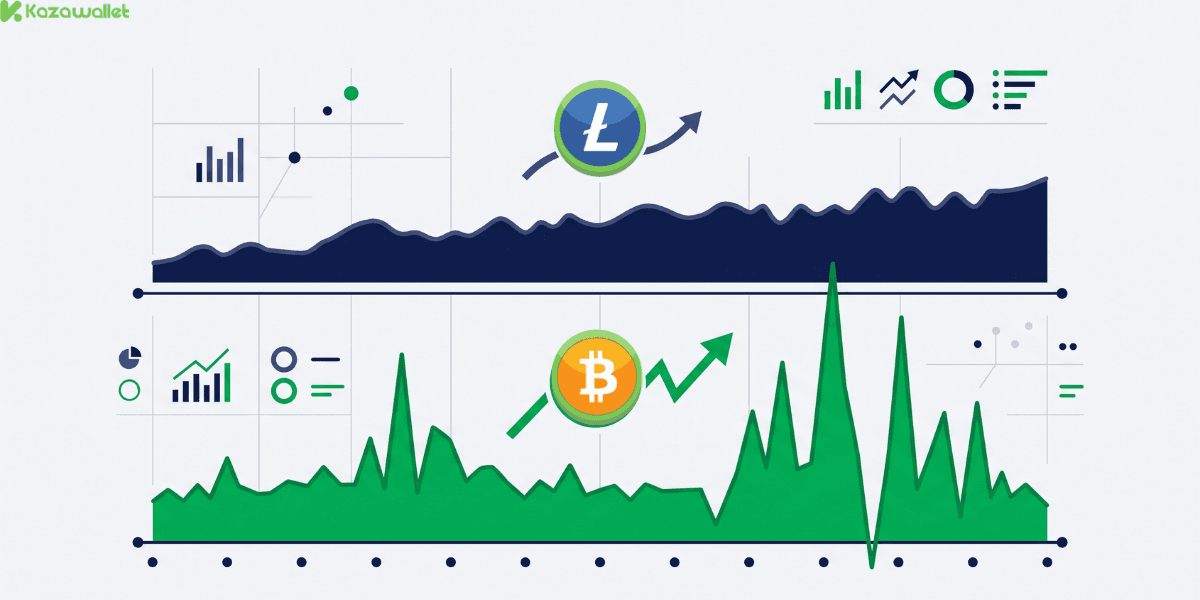
This comes down to crypto market liquidity, which simply refers to the volume of buy and sell orders available in the market at any given moment.
Think of it like throwing a pebble into a vast ocean versus tossing that same pebble into a small puddle.
In the ocean, you will barely see a ripple. In the puddle, noticeable waves reach every edge instantly.
High-liquidity assets: Coins like Bitcoin and Ethereum have deep liquidity, meaning massive volumes of buy and sell orders at any second. Consequently, moving their price noticeably requires substantial capital.
Low-liquidity assets: Smaller, less-traded coins have shallow liquidity. A single sizable trade can shift their price by double-digit percentages within minutes.
This explains why an obscure altcoin might spike or plunge dramatically in a short window while Bitcoin moves only slightly over the same period.
How Does Available Supply Influence the Price?
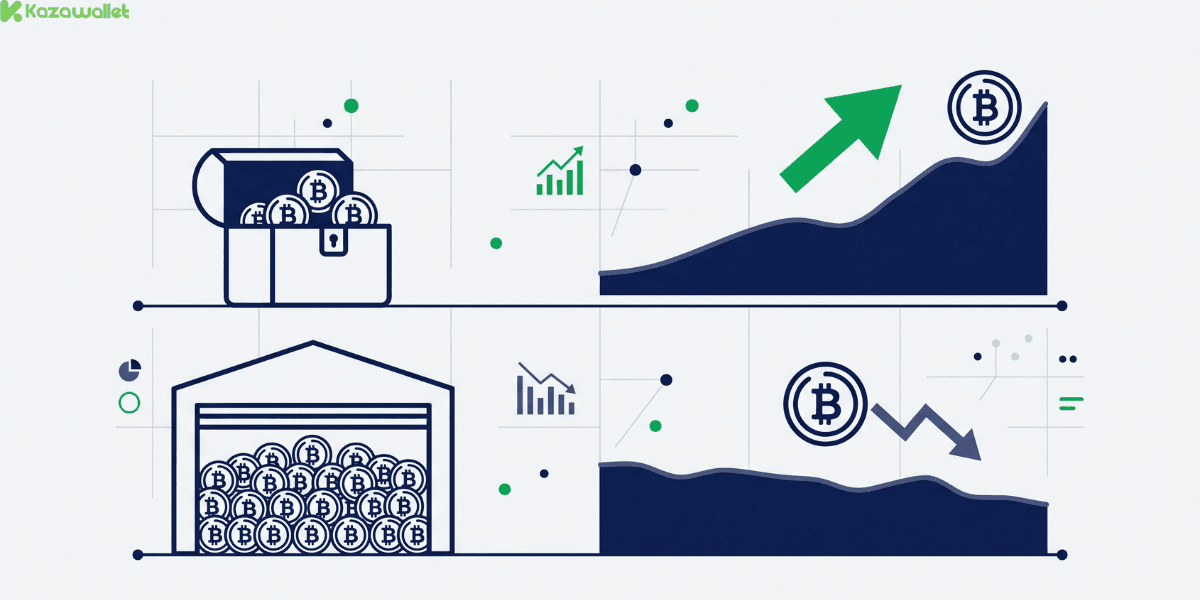
Certain cryptocurrencies, like Bitcoin, have a hard-coded maximum supply limit that can never be exceeded (21 million units). This means the circulating supply cannot expand rapidly to satisfy sudden surges in demand.
When unexpected demand rushes in and supply cannot adjust to match it, the price bears the entire burden of finding a new equilibrium.
A practical example occurred in January 2024, when US regulators approved the first batch of spot Bitcoin ETFs.
That regulatory green light allowed massive institutional capital to enter the market swiftly while the available supply remained virtually unchanged, leading to sharp price movements over the following weeks.
What Role Do News and Market Sentiment Play in Price Shifts?
When examining crypto price volatility explained through human behavior, a large portion of market movement has less to do with charts or technical data and everything to do with how people react emotionally to headlines.
A positive announcement, a mention from a prominent figure, or even an unverified rumor can prompt thousands of traders to buy or sell at the exact same moment.
For instance, the meme coin Shiba Inu once jumped roughly 20% within a short span following a brief social media nod from a prominent personality, without any fundamental change to the underlying project.
Conversely, the broader market shed nearly $120 billion in total valuation in a single day during early 2024, driven primarily by collective anxiety rather than a specific technical failure.
Is This Volatility Normal, or a Sign of a Problem?
In most cases, rapid volatility is simply an inherent feature of how this open market operates, not necessarily an indicator that something is broken.
When a price rallies or drops too aggressively in one direction, it is often followed by a price correction, the market naturally pulling back to a more balanced level after moving faster than genuine demand could support.
While sharp swings should never be ignored, fast-moving prices on their own are not automatically an alarm bell.
How Does a Platform Like Kazawallet Help You Navigate Continuous Price Shifts?
Because crypto prices move every second, you need a dependable environment that reflects your true balance clearly, sparing you the guesswork.
A platform like Kazawallet gives you the practical tools to stay in control:
Real-time balance updates: Know precisely where your funds stand at any moment, aligned with actual market movements.
Direct purchases and holding: Buy assets like Bitcoin and Ethereum directly, or hold your balance safely until you need it.
Direct conversion to USDT/USD and virtual Visa loading: Exchange your balance to US Dollars or USDT to fund a virtual Visa card for online spending anywhere Visa is accepted, without frustrating delays or multi-step holds.
This setup lets you navigate a fast-paced market with practical tools that reflect reality, free from delayed data or hidden steps.
Frequently Asked Questions (FAQ)
Does a single person or company decide crypto prices?
No. The price is the direct result of thousands of buyers and sellers agreeing on specific rates simultaneously across global exchanges, with no central entity setting the value.
Why does the price of the same coin vary slightly between platforms?
Each exchange runs its own independent order book with distinct traders and liquidity depth. This difference is usually minimal, but it explains slight discrepancies across platforms.
Why do smaller altcoins swing by larger percentages than Bitcoin?
Because of lower liquidity. When fewer buy and sell orders sit on the books for a given token, smaller trade volumes are needed to move its price significantly.
Is it normal for a price to change multiple times in a single minute?
Yes. That is a natural outcome for a 24/7 global market processing thousands of trades every single second.
In Closing
Cryptocurrency prices move every second not because someone sets them, but because they reflect a nonstop, global auction between millions of buyers and sellers.
Liquidity levels, fixed supply caps, and emotional reactions to breaking news all work together to drive this ongoing movement.
Understanding these mechanics will not eliminate market swings, but it will give you the clarity to navigate them calmly and make well-informed financial decisions