Open your banking app or digital wallet right now and look at the number at the top of the screen. You believe that number instantly.
You plan your day around it, you feel relieved or anxious depending on its size, and you never really stop to ask: where did this number actually come from? Is it "my money" in a literal sense, or just a record telling me that money exists somewhere?
That question sounds strange at first, because we've relied on this trust in digital money for so long that we've stopped noticing it. But understanding it helps you deal with your finances more consciously, especially in a world where more than half of all financial transactions are now fully digital.
This article breaks down, in simple terms, how this trust in digital money was built, and why we treat the numbers on our screens like real cash in our hands.
What actually makes us believe the number on the screen is our money?
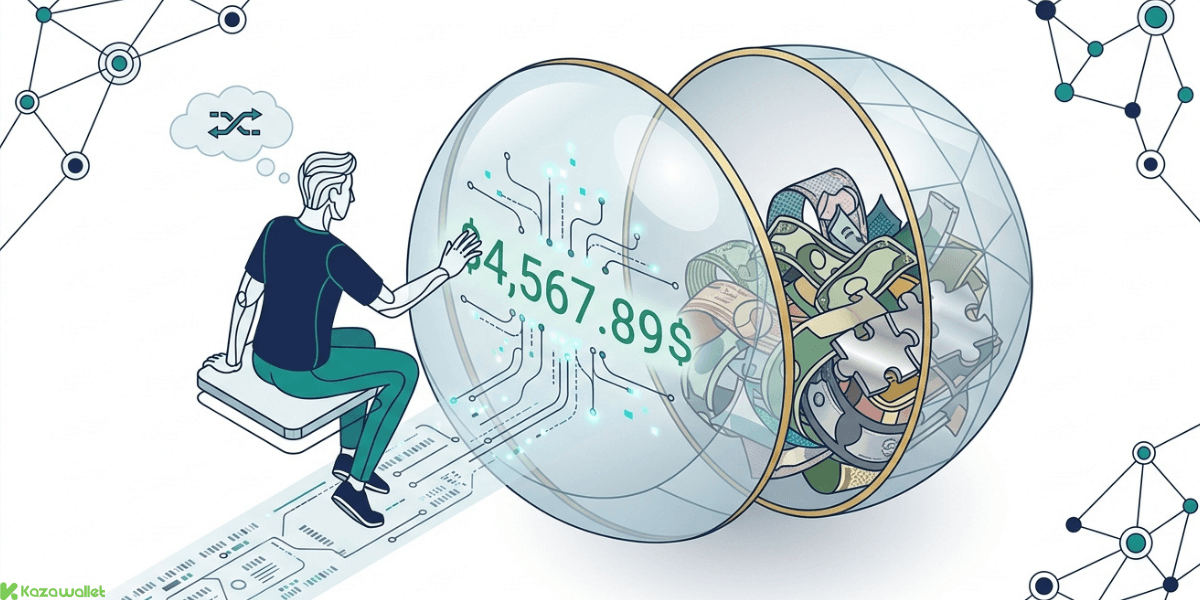
Money was never really "real" in a purely physical sense. Even the paper bill in your pocket isn't valuable on its own, it's a piece of paper we've all agreed, as a society, represents a certain value.
The number you see in your banking app isn't fundamentally different, it's the same agreement, just recorded electronically instead of printed on paper.
In practice, your bank balance is an accounting record, what's called a ledger, showing that the bank owes you a certain amount, not that this exact amount is physically sitting in a vault with your name on it.
When you deposit money in a bank, it doesn't just sit there. Most of it gets lent out to other people and businesses, while the bank keeps only a portion on hand as ready cash. This system works because there's public trust behind it:
- Regulators and oversight bodies monitor banks and enforce clear standards to protect depositors' money.
- Deposit insurance systems, in many countries, guarantee you'll recover at least part of your money even if the bank runs into trouble.
- Precise electronic records updated in real time, which is why you trust that the number you see is accurate and current.
In other words, you're not really trusting the number itself, you're trusting an entire system standing behind it.
Why do we spend more when we don't physically touch the money?
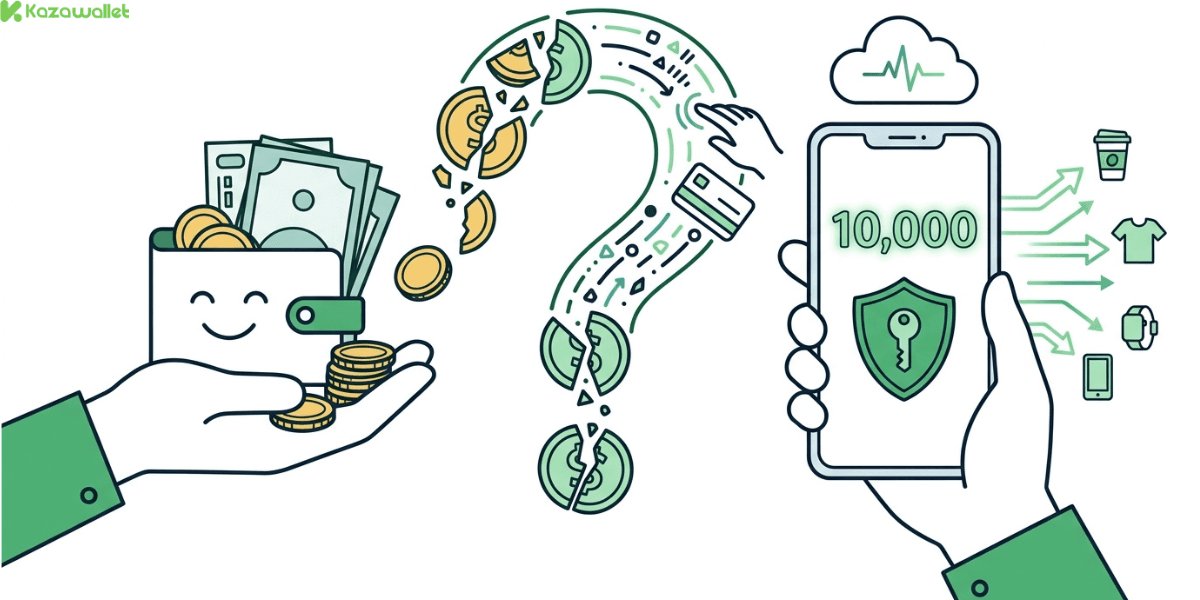
There's a well-documented psychological effect called the "pain of paying", the mild sense of loss that comes with spending money.
That feeling is much stronger when you hand over a physical bill you can see leaving your hand, and much weaker when you make digital payments with a tap of a phone or a card instead.
Research from MIT found that people spend more when paying by card compared to cash, because digital payment creates psychological distance between the moment of purchase and the moment you actually feel the loss.
That effect gets even stronger with "buy now, pay later" services, which separate the enjoyment of getting something now from the cost of it, which gets pushed to later.
According to data from 2026, more than 54% of financial transactions worldwide are now fully digital, and in countries like Sweden that figure is closer to 90%. The more we rely on numbers instead of physical cash, the easier it becomes to spend without fully feeling the weight of it.
Do we trust the number on the screen the same way everywhere?
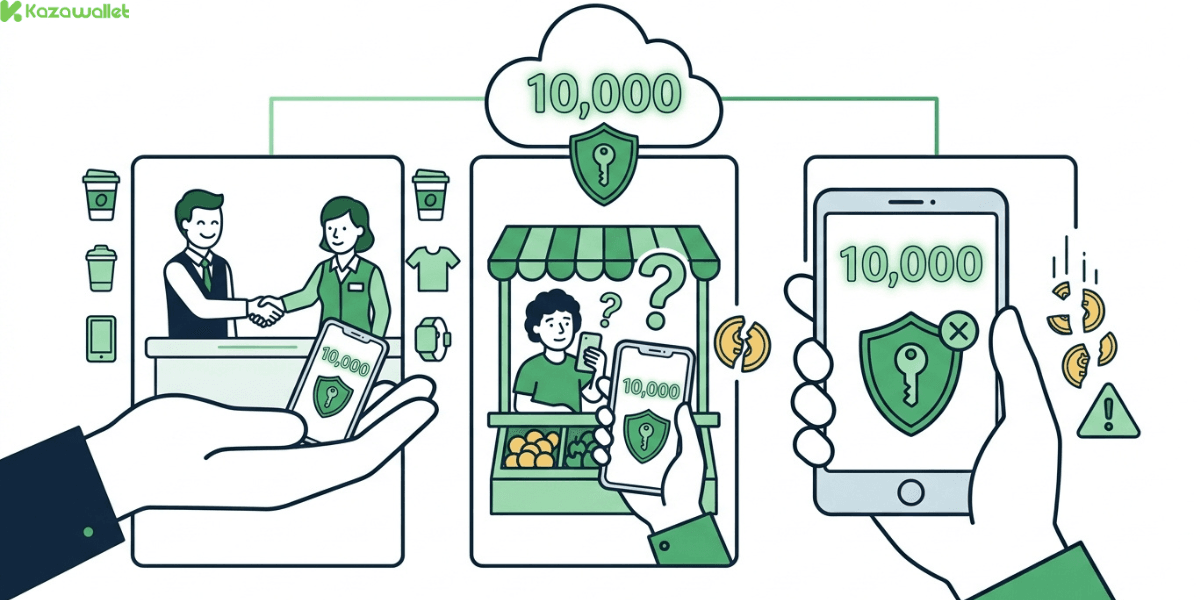
Not really. Confidence in digital money varies from one society to another, and it's closely tied to how much people trust financial institutions in general.
In places with deep, established trust in banks and regulators, people move more easily toward relying entirely on digital numbers.
In places that have lived through financial crises or currency collapses, people tend to stay more cautious, often keeping part of their money in something tangible, or in a more stable currency.
This is actually part of what explains the growing interest in crypto and stablecoins. Instead of trusting a number that only exists inside one traditional bank's internal system, some of these tools let you verify your balance independently through an open record anyone can check, which gives some people an extra sense of clarity and transparency, even though it still ultimately depends on trusting whatever platform or wallet you use to hold and manage it.
Can Trust in Digital Money Actually Break?
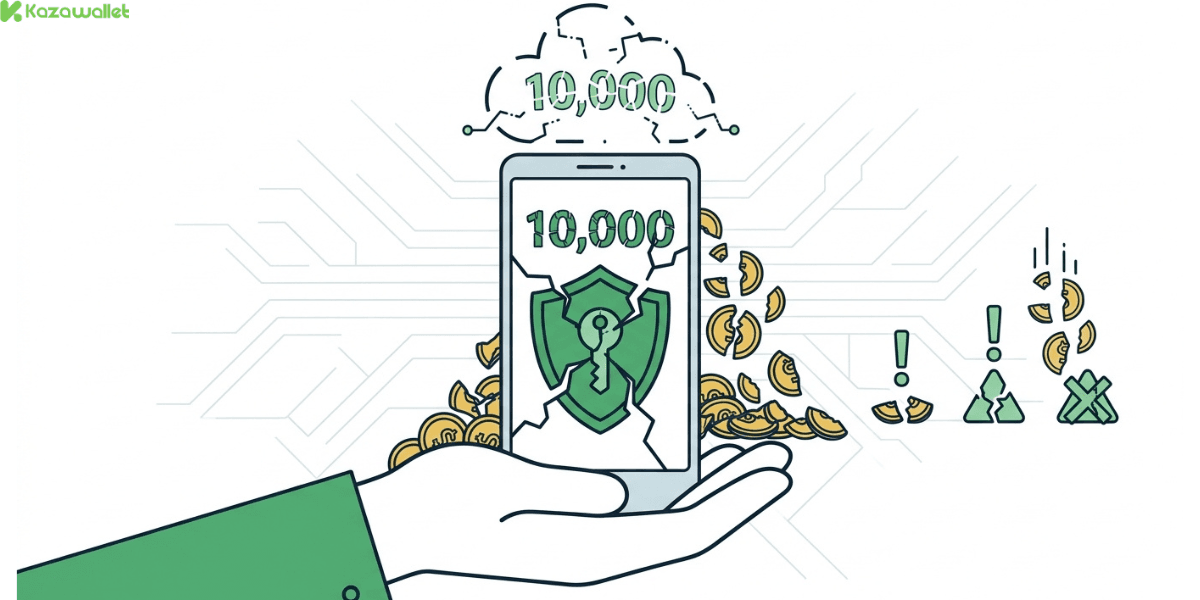
Yes, and that's normal for any system built on trust. When a large number of people suddenly lose confidence in a financial institution at the same time, everyone may try to withdraw their money at once, something known as a "bank run", and it makes it very clear that the number on your screen isn't fully available cash at every single moment.
Technical failures or security breaches can also temporarily shake that trust in digital money, even if they're rare.
That doesn't mean you should constantly worry about your digital money. It just means it's worth understanding how the system you're trusting actually works, and choosing carefully who you trust it with.
How does a platform like Kazawallet close this gap between the number and real trust?
A big part of the uncertainty people feel about digital money comes from vagueness, seeing a number on a screen without knowing exactly how to turn it into something tangible when you need it.
A platform like Kazawallet tries to close that gap in a few practical ways:
- Real-time balance updates: you know exactly where your money stands at any moment, with no waiting and no guesswork.
- Direct conversion to your local currency and withdrawal: you can turn your balance into actual cash whenever you need it, with no waiting periods or extra verification steps holding things up.
- Direct conversion to USDT or dollars and loading a virtual Visa card: turning your digital balance into real spending power anywhere Visa cards are accepted online, just like a regular bank card.
That way, the number on your screen stops being an abstract figure and becomes something you can verify and convert clearly, whenever and however you need it.
Frequently Asked Questions
Does this mean my money in the bank isn't safe?
No. It means your balance is built on a regulated trust system, not on physical cash sitting there waiting for you at every moment. Banking regulation and deposit insurance exist specifically to handle this reality and protect depositors' rights.
Why do some people trust their crypto balance more than a traditional bank balance?
Because some cryptocurrencies rely on an open record anyone can independently verify, while your traditional bank balance sits inside an internal system you can't access directly in the same way.
Does paying digitally actually make me spend more?
Several studies suggest that paying without handling physical cash reduces the immediate feeling of loss, which can push some people to spend more without fully noticing it. Simply being aware of this effect is a good first step toward managing your spending better.
How can I make sure the number I see in a financial app actually reflects my real money?
By choosing reputable platforms that show real-time balance updates and let you transfer or withdraw your money clearly, without confusing fees or hidden steps.
In closing
The number you see in your financial app isn't money in a purely physical sense, it's a representation of an entire trust system: institutions, regulations, and precise records working together.
That trust wasn't automatic, it was built over time, and it can be shaken under certain conditions.
Understanding this doesn't make you trust your digital money less, it makes you more aware of how it actually works, and better equipped to choose the tools you manage it with, clearly and with peace of mind.