If you're part of a younger generation, your relationship with your bank probably looks different from your parents'. You might have an account, you might open the app now and then, but your real trust is spread across other tools: a digital wallet, a payment app, maybe a crypto wallet too.
That's not just a personal feeling; it's a pattern backed by data. According to research published in 2026, more than half of Gen Z now consider a fintech company their most trusted financial brand, rather than the bank where they actually hold an account.
This article breaks down why this shift has happened, and how young generations trust banks differently today compared to the past.
Why Do Young Generations Trust Banks Less Today?
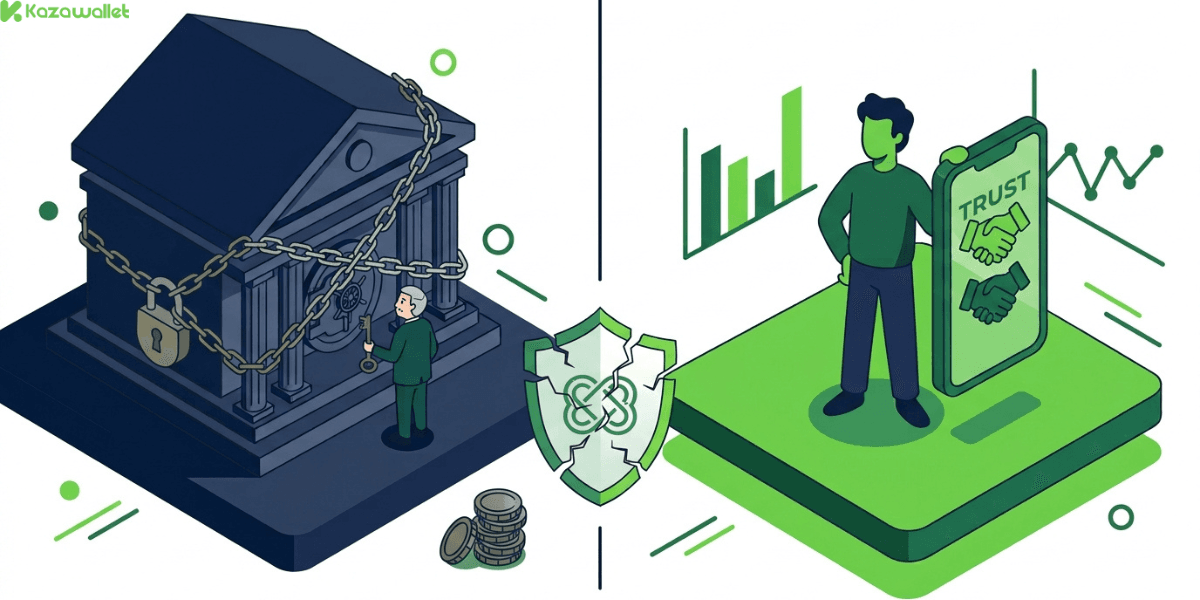
The answer is more nuanced than it sounds. When we look at how young generations trust banks, we see they aren't rejecting the idea of banks outright.
Instead, their trust has spread out across several tools rather than sitting with one institution. The bank has become one piece of the picture, not the whole picture.
A few numbers make these Gen Z banking habits clear:
- More than half of Gen Z users say a fintech company is their most trusted financial brand, and nearly as many have made that company their primary financial relationship.
- According to McKinsey, 65% of Gen Z respondents said they'd be willing to try a new e-wallet provider, compared to just 30% of baby boomers.
- At the same time, 60% of Gen Z still use more than one financial provider at a time, typically holding one or two bank accounts alongside roughly two digital wallets.
That last figure matters. Young people aren't abandoning banks entirely; they're spreading their trust across several tools instead of relying on a single institution the way older generations did.
Why did traditional banks lose part of young people's trust?
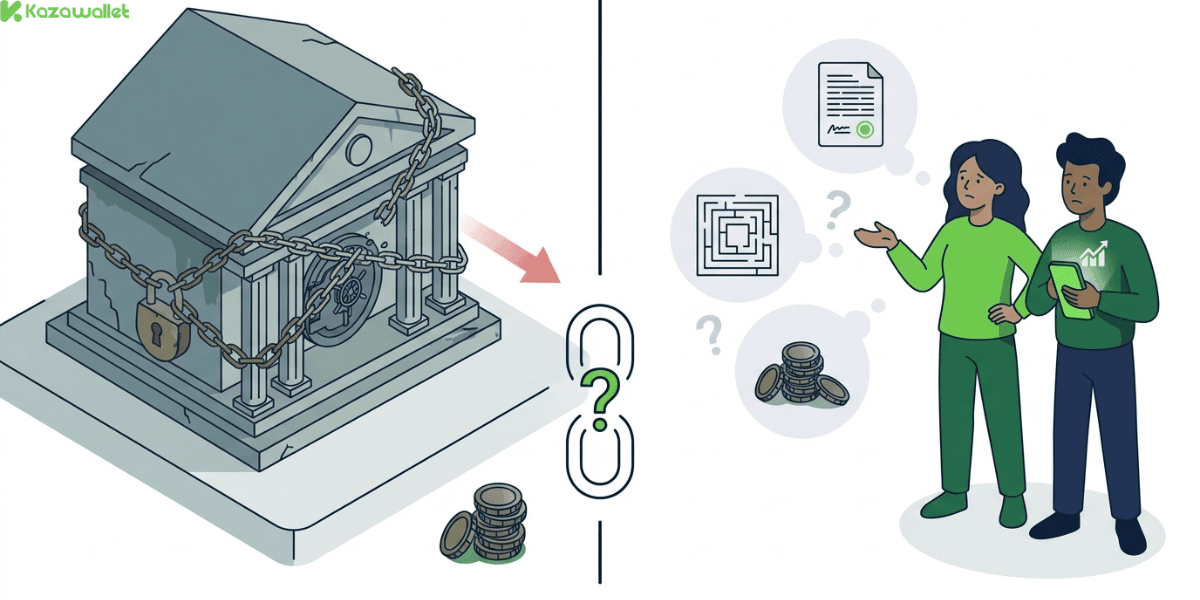
It is no secret that the degree to which young generations trust banks has declined due to a few recurring reasons:
- Lack of fee transparency: Overdraft charges, account maintenance fees, and unclear interest calculations all chip away at trust. Young users want to know exactly where their money is going, and when that clarity isn't there, they start looking for a simpler alternative.
- Banking models built for a different era: Most traditional banking systems assume a customer has a stable job and a predictable monthly paycheck. But a lot of young people today work freelance, run side gigs, or earn variable income from multiple sources, and that reality doesn't always fit products designed decades ago.
- Slower digital experience compared to modern apps: Younger users grew up with fast, intuitive apps. When their bank's app feels clunky or complicated next to newer fintech tools, it naturally becomes less of a first choice.
- Alignment with personal values: Some research shows a meaningful share of young users would switch providers if they felt their current one didn't reflect their values, whether that's transparency or broader ethical practices.
Where is that trust going instead?
Rather than relying entirely on a traditional bank, many young people now spread their financial needs across a handful of tools, each covering a specific job:
- Peer-to-peer (P2P) payment apps: tools that let you send and receive money directly between people, without a bank visit or an expensive wire transfer. Around 85% of Gen Z have used this kind of app to make actual payments.
- Digital wallets: A phone app that holds your money and lets you pay or transfer directly from it, without pulling out a physical bank card every time. The rise of digital wallets for Gen Z is evident, with about 39% saying it is their preferred way to pay for online purchases specifically.
- Crypto wallets: Roughly 34% of Gen Z now own at least one crypto wallet, a sign that comfort with digital assets is becoming part of everyday financial life, not just a niche investing experiment.
On average, a single Gen Z user relies on close to five different financial apps, each one covering a specific need: one for everyday payments, another for savings, maybe a separate wallet just for crypto. In other words, the trust didn't disappear; it just got distributed.
Does this mean young people are walking away from banking altogether?
Not really. A more accurate way to put it is that young people aren't rejecting banking; they're rejecting the old version of it. Most research shows that young users still keep at least one bank account; they just no longer treat it as the default place for every financial need.
Put simply, the traditional bank went from being "the only option" to being "one option among several", and that shift is really what all this research is describing.
Where does this new kind of trust meet a platform like Kazawallet?
Much of what young people are looking for in this research - clear fees, fast transfers and a simple experience - is exactly what modern fintech platforms are trying to deliver.
A platform like Kazawallet offers several of these features in practice:
- Direct, fast money transfers: You can deposit your balance and convert it directly to your local currency, then withdraw it, with no waiting periods or extra verification steps holding up your money.
- Manage both crypto and regular balances in one place: you can buy digital currencies like Bitcoin and Ethereum, or simply hold your balance until you need it.
- Direct conversion to USDT or dollars and loading a virtual Visa card: to spend online anywhere Visa cards are accepted, just like a regular bank card.
Whether you're looking for a way to send money to family or you just want to manage your own digital balance without the hassle, you get practical tools that reflect exactly what an entire generation of users is looking for: clarity, speed, and full control over their own money.
Frequently Asked Questions
Does this mean Gen Z won't open bank accounts at all?
No. Young people are still opening bank accounts, actually in growing numbers, but they're not relying on them alone. They pair them with digital wallets and other payment apps.
What's the difference between a fintech app and a traditional bank?
When comparing fintech vs traditional banks, a traditional bank is a licensed institution offering a full range of services—checking accounts, loans, savings, and more. Fintech apps tend to be lighter and faster, focused on one specific job like transfers, payments, or managing crypto, usually with a simpler interface and clearer fees.
Why do young people care so much about fee transparency?
Because they're used to apps that show every detail clearly before they confirm anything. When a traditional bank account has an unexpected or unexplained fee, it feels unfair, and that pushes people toward an alternative that lays everything out upfront.
Is relying on a digital wallet instead of a traditional bank safe? That depends on how credible and reliable the provider is. It's worth choosing a well-established platform with clear security standards, and reading its policies before depositing any money.
In closing
The fact that young generations trust banks less today isn't a full rejection of banking; it's a redistribution of trust across several tools that offer more transparency, faster service, and a simpler experience
Digital wallets, payment apps, and crypto wallets are no longer niche alternatives, they've become a core part of everyday financial life for an entire generation.
The clearest takeaway is that the financial future won't sit with one institution, it'll be spread across whichever tools each person chooses to fit their own needs.