Every human society has unwritten rules of etiquette, nowhere to be found in an official manual but implicitly known by everyone: don't ask about someone's salary, and don't show up late without an apology.
The cryptocurrency community has developed its own c rypto etiquette, but here, it transcends mere social politeness; some of these rules are your first line of defense against losing your funds entirely.
In this article, we gather these unwritten rules in one place: what is considered unacceptable social intrusion, what is strictly a non-negotiable security measure, and how to tell the difference between the two before you learn it the hard way.
Quick Summary
Crypto etiquette combines simple social rules with strict, non-negotiable security protocols.
The most prominent include: never ask someone about their portfolio value just as you wouldn't ask about their salary; never share your Seed Phrase with anyone, no matter how official they seem; and do not interact with unsolicited direct messages asking for money or sensitive data, true official support will never message you first.
In new communities, the golden rule is to observe before participating and to prefer public discussions over private messages.
Finally, avoid pushing close contacts, especially the elderly or inexperienced, into high-risk investments without clear warnings.
What is Crypto Etiquette, and Why Does it Differ from Traditional Finance?
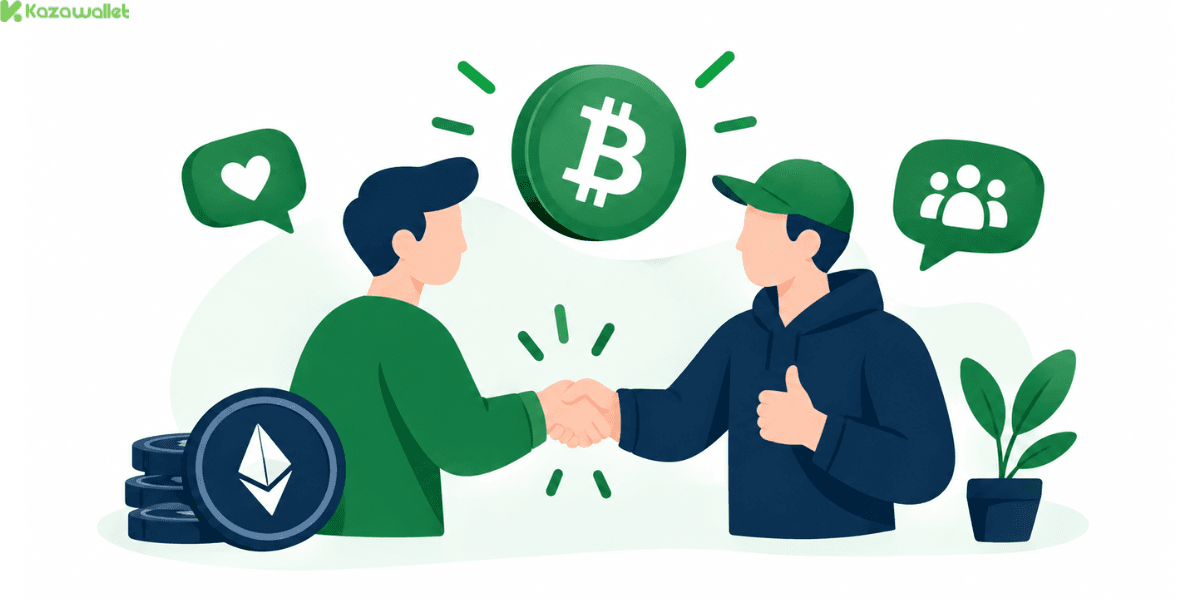
Traditional finance etiquette is relatively well-known: don't ask about salaries, don't ask for a loan without a good reason, and don't discuss other people's debts publicly.
However, crypto etiquette carries an additional layer not found in traditional finance, for one simple reason: most crypto transactions are irreversible once executed.
There is no bank to call to cancel a mistaken transfer, and no central authority to refund your money if you get scammed.
This technical reality has transformed many "politeness rules" in this community into actual security measures, not just social courtesy. In other words, breaking some of these rules doesn't just mean you'll look rude; it could literally mean losing your money.
Why is Asking About Portfolio Size as Rude as Asking About Salary?
In most crypto communities, the question "How much do you hold?" is met with the same coldness as "What's your salary?" in a traditional workplace. This reservation isn't arrogance or unjustified secrecy; it has a clear practical reason.
Disclosing the size of your portfolio, especially if linked to your real name or public identity, makes you a direct target for phishing attempts or even physical security threats.
For this precise reason, many seasoned users advise against linking digital wallets to your real name online and warn against sharing your wallet address publicly unless absolutely necessary.
The rule here is simple: bragging about your profits or investment size, whether online or in real life, is viewed as both a social and security blunder.
The second closely related rule: avoid asking for direct financial advice, such as "What should I buy now?" This places the person you are asking in a position of responsibility they usually do not want, as investment decisions in this space are entirely an individual responsibility.
The more socially acceptable alternative is to ask about the research tools they use or how they analyze a specific project's performance, rather than asking them to decide on your behalf.
What Are the Golden Rules to Protect Yourself from Scammers?
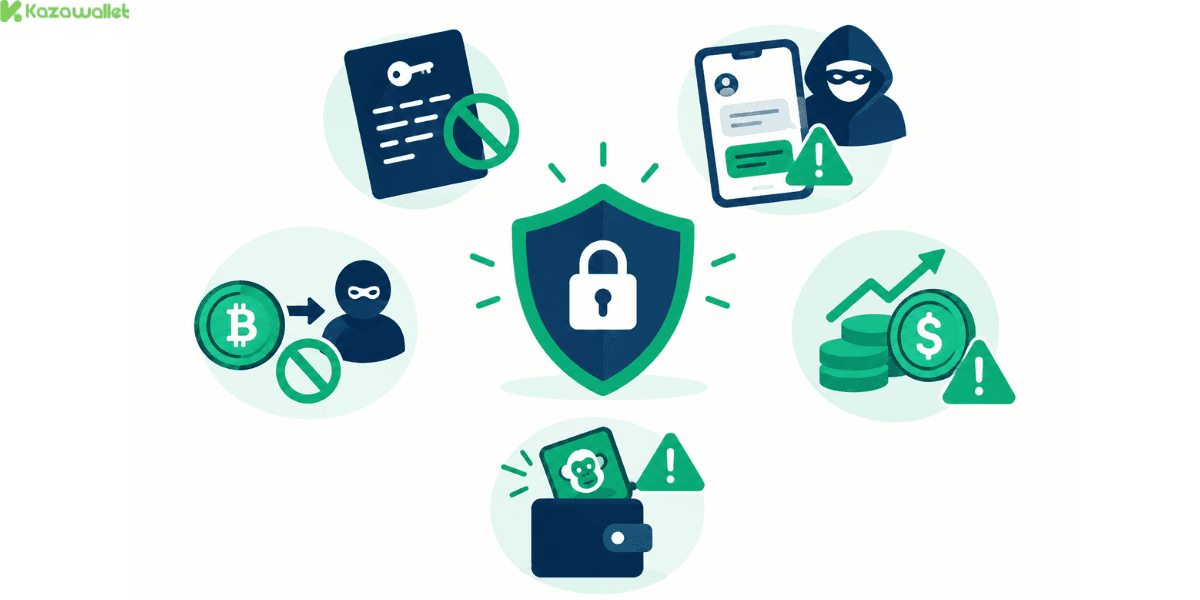
This set of rules goes beyond simple social courtesy to become actual defense lines, unanimously emphasized by digital security experts:
Never share your Seed Phrase or Private Key with anyone, no matter how official or trustworthy they seem. No legitimate company will ever ask for this information under any pretext.
Treat any unsolicited private message with extreme suspicion, whether via email, messaging apps, or even dating apps, especially if they ask you to send funds or sensitive data.
Do not send cryptocurrency to anyone who contacts you first unprompted; this unsolicited communication is the most common tactic among scammers.
Consider any guaranteed profit or instant doubling of funds to be a clear scam. There are no guaranteed returns in the investment world generally, and crypto is no exception.
Treat any token or NFT that appears in your wallet unrequested with absolute suspicion, and never click on any associated links, no matter how attractive or free they seem.
For a deeper dive into some of the terms you will encounter while applying these rules, such as Seed Phrases and common scams, you can review our guide to decoding crypto terminology.
What is the Initial Interaction Etiquette When Joining Crypto Communities?
Every new community, whether on Discord, Telegram, or social media platforms, has its own rhythm that is best learned before actively participating:
Observe before you participate: New users are usually advised to spend enough time reading past discussions before asking questions or sharing opinions. This gives you a clearer understanding of the group's specific culture and interaction style.
Do Your Own Research (DYOR) before asking basic questions: The "DYOR" principle isn't limited to investment decisions; it extends to the etiquette of asking questions. Before asking a simple question like "How do I open a wallet?" in a tech group, try googling it first. The community welcomes those who attempt self-learning before seeking help.
Prefer public discussions over DMs: Replying publicly to a post or tweet with a thoughtful question usually yields better engagement than a direct message to someone who doesn't know you, especially with prominent figures who receive hundreds of messages daily.
Honestly admit what you don't know: Asking a simple question or admitting a lack of understanding is not seen as a weakness in this community; quite the opposite. Pretending to know everything is usually exposed quickly and met with a much harsher reaction.
Take responsibility for your own financial decisions: If you follow someone's analysis in a public group and lose money as a result, the unwritten rule says the responsibility falls entirely on you because you didn't do your own research before deciding—not on the person who shared their opinion for free.
Share your experience with any scam attempt publicly instead of staying silent out of embarrassment. This helps community moderators ban scammers and warns other members who might fall into the same trap.
What is the Etiquette for Discussion and Promotion?
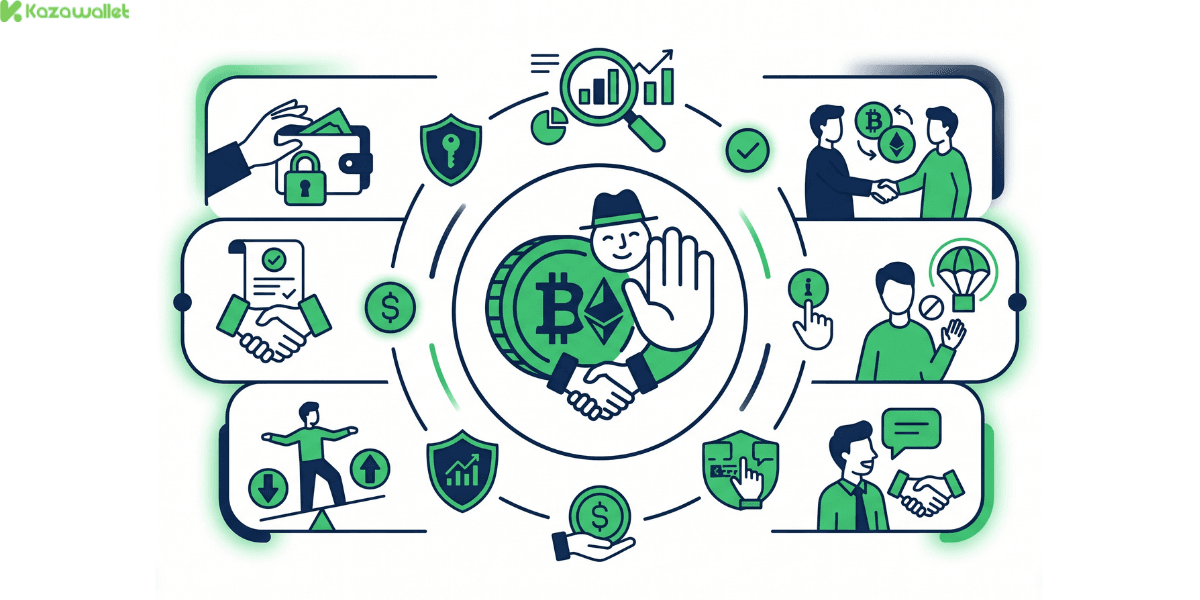
Since this community is fundamentally built on intense debates around competing projects, it has developed its own rules to keep these discussions constructive rather than chaotic:
Avoid blind fanaticism for a single coin, often known as "Maximalism". Attacking other projects just because you aren't invested in them, without a technical basis or actual data to support your critique, is seen as unprofessional behavior that weakens your credibility, not as a strong stance.
Do not promote your favorite coin in groups dedicated to other projects. This type of unsolicited promotion is considered parasitic behavior (Shilling/Spam) and often results in an immediate ban from that group.
Stop spreading fearful rumors or emotional buying hype without a factual basis. Whether it's intentionally spreading Fear, Uncertainty, and Doubt (FUD) to panic people into selling, or unjustified emotional hype to push them into Fear Of Missing Out (FOMO) buying. Both patterns are viewed as manipulation that harms your long-term credibility in the community.
Is it Socially Acceptable to Persuade Close Friends to Invest?
There is generally no harm in sharing your knowledge or enthusiasm for crypto with friends or family, but the unwritten etiquette here imposes clear boundaries:
Promoting highly volatile or high-risk coins, especially to individuals who lack the experience to manage a digital wallet themselves, or to the elderly who might not fully grasp the nature of this risk, is seen as irresponsible behavior, not just friendly sharing of information.
The practical rule adopted by many seasoned users is simple: If you decide to introduce someone close to you to this world, make sure first that they are capable of securing their own wallet, and that any amount they put in is an amount they can afford to lose entirely without affecting their basic financial stability.
What is the Etiquette for Interacting with Developers and Founders?
One of the most common mistakes made by beginners, and the most annoying to project teams, is asking repetitive questions like "When is the listing?" or "When will the price go up?" (famously mocked in the community as "Wen Moon" or "Wen Binance") directly to developers or founders.
This question, however innocent it seems, is viewed as an unintentional insult to a long, hard technical effort.
It reduces an entire team's work to a single question about price and immediately labels the asker as a short-term speculator who doesn't care about the project or its technology.
If you are interested in a project, the most socially appropriate question relates to its technical progress or roadmap, not its price pump schedule.
How to Practically Apply These Rules When Using a Platform Like Kazawallet?
Understanding these unwritten rules helps you interact more confidently with the entire crypto community, including your relationship with the platform through which you manage your digital funds:
Always remember that official support does not message you first: The Kazawallet support team will absolutely never ask you to share your sensitive data or Seed Phrase via an unexpected private message. Any communication of this sort must be treated with immediate suspicion.
Keep your wallet details private: Whether you are managing your crypto or fiat balances via Kazawallet, these details remain your private business alone, and there is no need to share them publicly with any party.
Act with complete clarity in every transaction: From direct swapping to USDT or USD, to funding a virtual Visa card, rely on clear platform procedures without needing to depend on unreliable advice from third parties.
For further understanding of the psychological aspect of this community and how its users handle their financial decisions, you can also review The Psychology of Crypto Spending: Why it Feels Different from Cash.
Frequently Asked Questions
Is it also considered rude to ask what kind of coins I invest in, or just the total value?
Discussing types of coins or general investment strategies is usually socially acceptable, and sometimes even welcomed as a knowledge-sharing discussion. What is specifically prohibited is asking for the exact total value of someone else's portfolio.
Why does everyone insist that official support never messages you first?
Because impersonating tech support is one of the most common scam tactics in this space. Legitimate companies wait for you to initiate contact through their announced official channels; they do not proactively message you about an issue with your account or wallet.
Is sharing my profits on social media always unacceptable?
Not absolutely unacceptable, but it is viewed with caution, especially if the post is linked to your real identity or details specifics about your portfolio, as this could make you a direct target for scams or security threats.
What is the difference between sharing my knowledge about a coin and sharing investment advice?
Explaining how a specific coin or its technology works is usually considered useful and socially acceptable information. However, directly promoting the purchase of a specific coin, especially without disclosing any personal interest in its price increase, is known as shilling and is viewed with clear suspicion by the community.
Conclusion
Crypto etiquette is not merely minor social details you can ignore; it is a system forged over years by the experiences of an entire community. Some are simple lessons in politeness, while others are costly lessons paid for by those before you.
Learning these rules in advance saves you social embarrassment at best, and actual financial loss at worst.
The golden rule that summarizes it all: Stay cautious, and respect the privacy of others just as you want them to respect yours.