For the first time in football history, the concept of a "Digital Twin" has entered the heart of a major tournament.
Every player at the 2026 World Cup underwent a full-body scan before the competition began, creating a virtual, exact replica used for officiating and tactical analysis. Now that the tournament has reached the Round of 16, the technology is starting to prove its worth on the pitch.
But here's the real story: the same idea, building a precise digital copy of something real, updated in real time and fully verifiable, is exactly what's driving the shift of money and financial assets into the digital realm, from e-wallets to blockchain-recorded assets.
This article explains how the two are connected, and where that connection might lead.
What Is a Digital Twin at the 2026 World Cup?
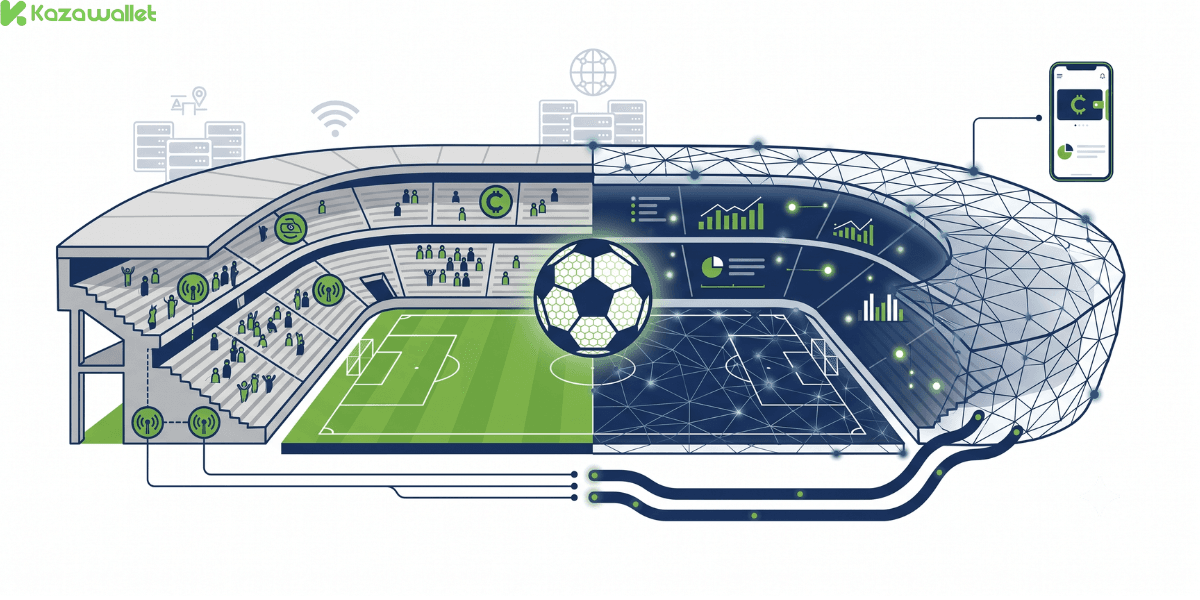
A digital twin is a precise virtual replica of a real body or system, continuously updated to mirror its actual state in real time.
The idea itself isn't new, industries like aviation have used it for years to simulate engine performance before failures occur. What's new is applying that same concept to the human body, then deploying it in a sporting event as massive as the World Cup.
The key difference between a digital twin and traditional video footage or data analysis is that a twin simulates rather than simply records.
It allows officials to reconstruct a specific moment, model a referee's decision, or test a scenario that hasn't even happened yet, all based on data that precisely matches reality.
How is Digital Twin Technology Used with World Cup 2026 Players?
Before the tournament kicked off, players underwent comprehensive body scans that produced an exact digital replica of each one. These replicas have since enabled several real, on-the-ground applications:
- Reconstructing a player's exact position at the precise moment of an offside call or physical contact, with a level of precision that goes beyond what the human eye or traditional cameras can capture.
- Supporting VAR decisions with 3D data instead of limited camera angles.
- Analyzing player performance in greater depth by simulating their movement and comparing it against their digital reference model.
This application was discussed directly at the 10th edition of Viva Technology, which opened in Paris in mid-June 2026.
Among other topics, the event covered how tournament players underwent body digitization and scanning to create an exact digital replica, or "digital twin," of themselves.
The stated goal wasn't technological showmanship; it was tangibly improving the accuracy of officiating and analysis.
Where Do Things Stand Now?
The World Cup isn't over yet, and the Round of 16 is about to wrap up, the stage where every refereeing mistake becomes a public controversy, and every borderline call turns into a talking point.
This is exactly the environment where the real value of a digital twin gets tested, not in pre-tournament promotional material.
The coming months, through to the final, will determine whether this technology becomes a permanent standard in future tournaments or remains an experiment still under evaluation.
You can actually leverage this massive influx of data yourself! Discover how to use AI to predict World Cup 2026 results and see how systems decode player performance dynamics to formulate precise statistical match insights.
What Does the Digital Twin Have to Do with the Future of Digital Currency and E-Wallets?
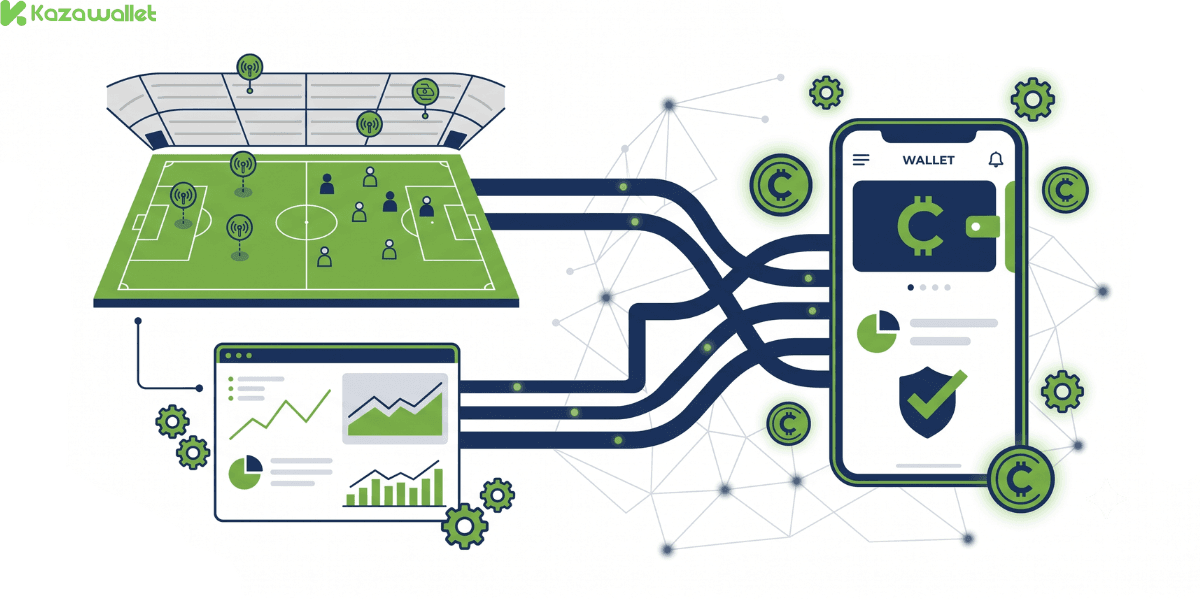
The digital twin concept isn't exclusive to sports. The financial sector has already been using it for some time to build virtual replicas of assets and portfolios, aiming to simulate market scenarios and make sharper decisions before committing to them.
That same principle, a precise digital copy, updated in real time and fully verifiable, is what's driving money's evolution from paper to digital in all its forms:
- E-wallets that reflect your actual balance in real time.
- Cryptocurrencies, whose movement is recorded on a distributed digital ledger.
- Smart contracts, which execute pre-set conditions without a human intermediary.
In other words: whether you're building a precise digital replica of a player's body to analyze their movement, or a digital replica of a financial portfolio to analyze its risk, you're applying the exact same technical logic, just to two very different assets.
What's the Difference Between a Player's Digital Twin and a Wallet's Digital Twin?
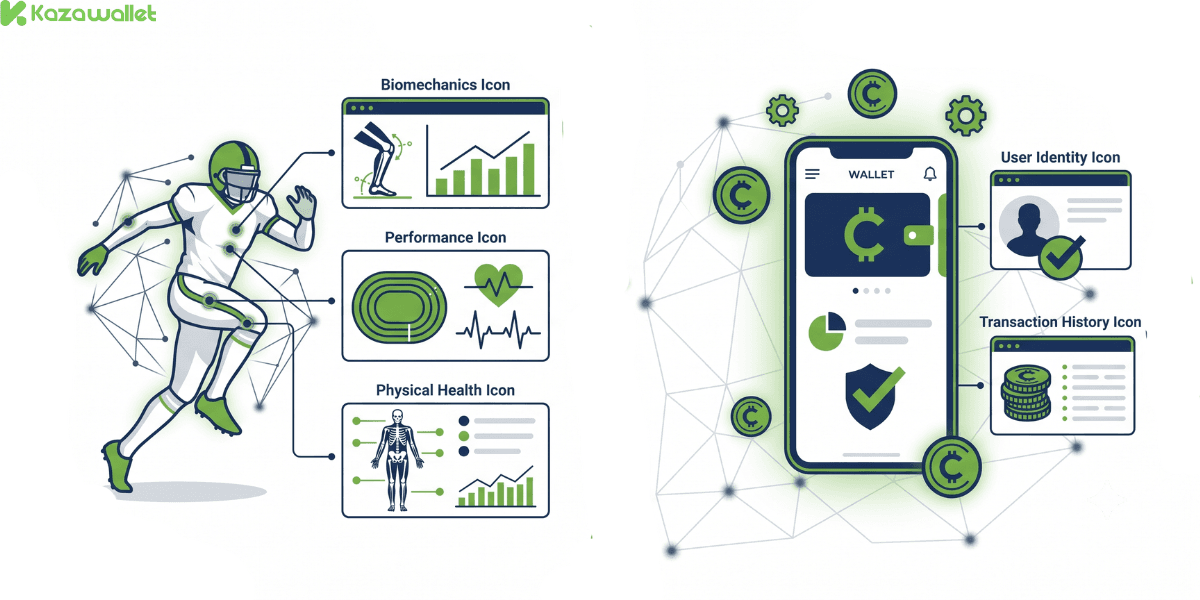
To understand the connection in practical terms, it helps to place the two side by side:
- In football, a player's body is digitally scanned to create an exact replica used for verification and analysis with a level of precision no traditional method can match.
- In digital finance, an asset's movement, whether a cryptocurrency or a balance in an e-wallet, is recorded on a digital ledger (like a blockchain) in a way that reflects its actual state in real time, verifiable without needing a traditional intermediary.
- The common thread: trust built through digital verification, rather than trust placed solely in a human intermediary.
Kazawallet's Role in Supporting This Digital Shift
Amid this evolution, Kazawallet offers the ideal solution to keep pace with the demands of the smart era. The platform provides a reliable bridge between crypto assets and everyday spending, offering:
- Virtual Visa cards: Kazawallet lets you create virtual cards instantly loaded with crypto, ready to use directly for payments, flight bookings, and hotel reservations.
If you are abroad or currently drafting your tour roadmap, review our practical guide on how to plan your World Cup 2026 budget using a Visa card to manage your logistical travel layout seamlessly. - Seamless, instant liquidity: The platform offers multiple channels for converting crypto assets into instantly spendable funds — ideal for fans on the move between host cities.
- Cross-border financial management: Kazawallet gives users complete freedom to manage their finances and pay anywhere in the world, backed by top-tier security standards.
To see how this infrastructure bypasses local payment restrictions, read our comprehensive manual on how to get a virtual Visa card in Syria for online payments to instantly fund your premium digital services.
What Do You Need to Set Up a Digital Payment Card for Watching the World Cup?
- Full account verification: Complete identity verification (KYC) on your wallet app to ensure your international card is issued and activated without any legal hurdles.
- Sufficient crypto balance: Keep your preferred digital currencies funded and ready for instant conversion to USD.
- An upgraded Visa card (Plus Card) for broader acceptance and enhanced transaction security.
Review full performance specs inside our dedicated breakdown: What is the Kazawallet Virtual Card and What Are Its Full Features. - A mobile wallet set up in advance: Link your virtual card to Google Wallet or Apple Wallet and confirm it, so it's ready to use via NFC.
Frequently Asked Questions (FAQ)
What's the difference between a digital twin and traditional video recording or analysis?
Traditional footage only documents what happened. A digital twin simulates the body or system in a way that can be reconstructed and tested, allowing analysis of scenarios that were never even captured on camera at a clear angle.
Is digital twin technology used only at the 2026 World Cup?
No. The concept has been used for years in industries like aviation, manufacturing, and finance. The 2026 World Cup is simply the first large-scale application of it to an athlete's body at a major global tournament.
How exactly does the digital twin relate to digital currencies?
Both rely on the same principle: a precise, verifiable digital representation of a real asset, updated in real time, reducing reliance on intermediaries and increasing the accuracy and trustworthiness of decisions and transactions.
Will digital twin technology spread to future football tournaments?
The current tournament, and specifically how the technology performs from the Round of 16 through the final, will be the real test. Early signs look promising in terms of officiating accuracy.
Does this mean digital currencies will become safer in the future?
In principle, yes. The shift toward more precise, verifiable digital representations of assets reduces the potential for manipulation. That said, actual security still depends heavily on the standards of the platform managing those assets.
In Closing
What connects a football pitch to your digital wallet is simpler than it looks: both are moving toward a world where the data proves its own accuracy.
As the 2026 World Cup heads into its decisive stages, this trend is worth following, not just as a sports story, but as an early signal of what financial transactions will look like next.