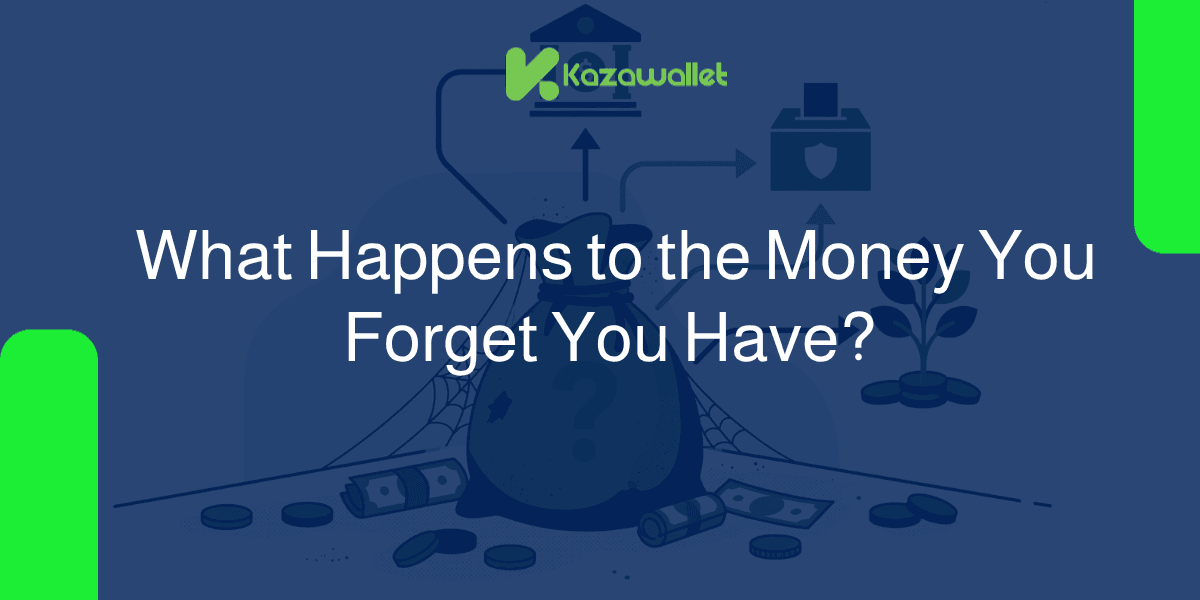
Perhaps you opened a bank account years ago for a specific purpose, then moved to another city or country and forgot about it completely. Or maybe you bought some cryptocurrency a while back, saved the password somewhere, and then lost track of it.
In both cases, the same question arises: where does this money go? Does it wait for you exactly as you left it, or does something change without you noticing before it turns into forgotten money?
Quick Summary (TLDR)
Money you forget about does not disappear immediately; it stays in its place or account.
However, its real value changes over time for three main reasons: inflation, which gradually reduces its purchasing power; bank maintenance fees, which can consume the balance entirely until it reaches zero; and its transition after many years into a forgotten money managed by government entities.
As for forgotten cryptocurrencies, their fate is radically different: losing the private key usually means a final, irreversible loss, with no entity capable of recovering it for you.
Why does the real value of forgotten money decline even if the number remains the same?
This is the least obvious factor because it does not appear on a bank statement as a deducted fee, but rather works entirely indirectly: financial inflation.
Inflation simply means that prices rise gradually over time, so the same amount buys a smaller quantity of goods and services each year. Suppose you forgot a certain amount in a bank account ten years ago.
The number written in front of you today might be exactly the same as what you left, but what that number can actually buy is much less than what it could when you first forgot it.
In other words, the money wasn't digitally stolen from you, but its purchasing power has quietly eroded over these years, without any notification or message telling you so.
This specific factor is what makes leaving large sums forgotten for long periods a silently costly decision, even if the owner doesn't lose a single penny directly.
What actually happens to your forgotten bank account?

When a bank account registers no activity for a long period, whether a deposit, withdrawal, or transfer, the bank classifies it as a dormant bank account
This classification triggers a series of legally defined steps in most countries:
The bank attempts to contact you via the registered address or phone number to ensure you are still alive and aware of the account's existence.
In some cases, the bank may impose periodic inactivity fees, gradually reducing the balance value the longer the neglect continues.
If the account remains inactive for a prolonged period determined by each country's laws, the bank transfers the remaining balance to a designated government entity, in a process legally known as remitting unclaimed funds to the state.
The money does not disappear completely. Even after it is transferred to a government entity, you retain the legal right to reclaim it at any later time, with no time limit preventing you from doing so in most legal systems.
The only problem is that you are the one who must search for it and claim it, as the relevant authorities will not track you down to return it to you automatically.
How much forgotten money actually exists in the world?
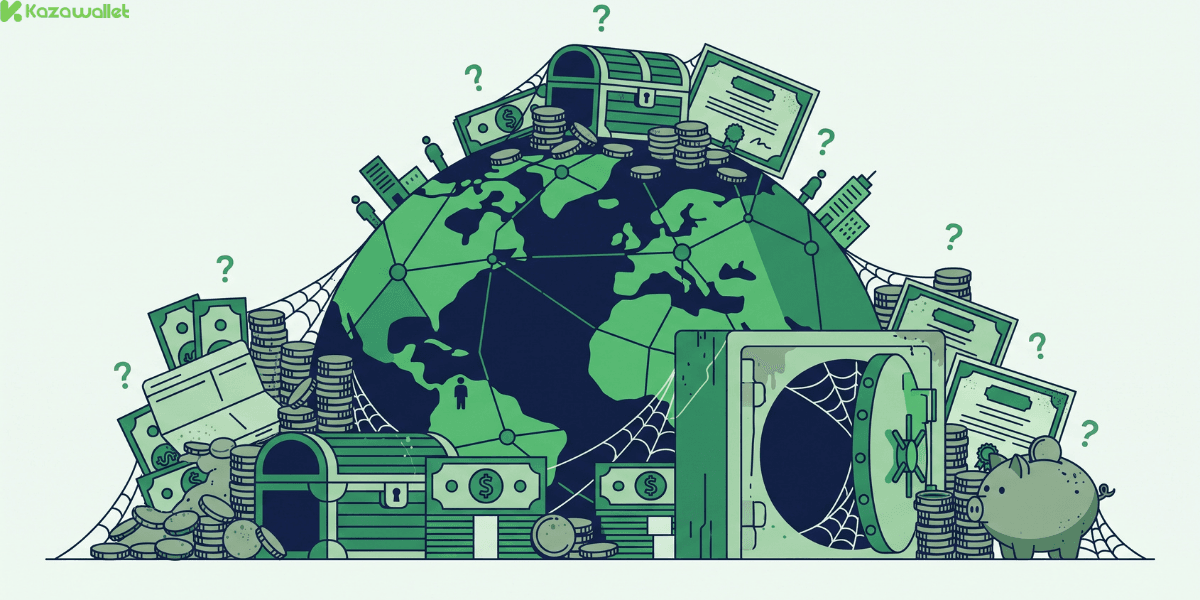
The numbers are much larger than most people imagine. According to recent data, total forgotten money in the United States alone approach $70 billion, distributed among old bank accounts, uncashed checks, forgotten investment accounts, and even safe deposit boxes that no one remembers anymore.
Estimates suggest that one in seven people in the United States has some form of this unclaimed money without knowing it.
Globally, these combined amounts exceed $100 billion, spread across various countries around the world.
Most of this money wasn't stolen or lost in the literal sense; it was simply forgotten for recurring reasons like moving frequently or changing phone numbers.
What is completely different with digital wallets and cryptocurrencies?
Here lies the fundamental difference that particularly deserves your attention. A traditional bank knows your identity and has records of you, so theoretically, it can reconnect you with your money even if you forgot it for decades.
However, in the case of digital currencies stored in a forgotten crypto wallet, there is no central entity that knows who you are or keeps a backup of your data.
Accessing your cryptocurrencies depends entirely on one thing called a Private Key, which is like a long, complex password.
One of the most famous examples of this is the story of a British man who forgot the password to an electronic storage device containing his private keys, and he had only two attempts left before the device permanently locked itself.
Estimates indicate that between 11% and 20% of the total Bitcoin supply has become permanently inaccessible.
How does a platform like Kazawallet reduce the risks of forgetting or losing access?
The practical lesson here is simple: dealing with your money requires a different level of awareness depending on the nature of each tool. Part of financial peace of mind comes from dealing with a platform that always allows you to clearly know your balance.
A platform like Kazawallet offers you this kind of security through:
A clear and visible balance at any time, instead of relying solely on remembering complex technical details that might be forgotten over time.
Managing both your digital and traditional currencies together in one account, reducing the likelihood of your funds being scattered across multiple tools that you might later forget.
Direct conversion to USDT or dollars and withdrawing it or topping up a virtual Visa card with it, so your money remains clearly usable.
Frequently Asked Questions
Is my money in a forgotten bank account lost forever after a certain period?
No, in most legal systems, there is no time limit preventing you from claiming your money even after it has been transferred to a designated government entity, but you must search for it and claim it yourself.
How do I know if I have forgotten money somewhere?
You can directly contact the banks you previously dealt with, or search through the relevant government entities handling unclaimed funds in the country where you resided.
Can any entity recover my cryptocurrencies if I lose their password?
If the currency is stored in a personal wallet that relies solely on your private key, then no. This differs from using a platform that keeps your account tied to your personal data, where options to restore access are usually available.
Conclusion
Money you forget does not necessarily disappear, but it takes a completely different path depending on its type.
Forgotten bank accounts are subject to legal systems that protect your right to reclaim them later, even after many years.
On the other hand, cryptocurrencies stored in personal wallets rely entirely on your personal responsibility. Knowing this difference is not just general information; it is a practical step that helps you protect your money, whatever its form.