Work is a continuous process; it happens hour by hour, day by day, but the pay for it arrives in a single lump sum at the end of the month. That gap between when work gets done and when its financial value reaches you raises a serious question:
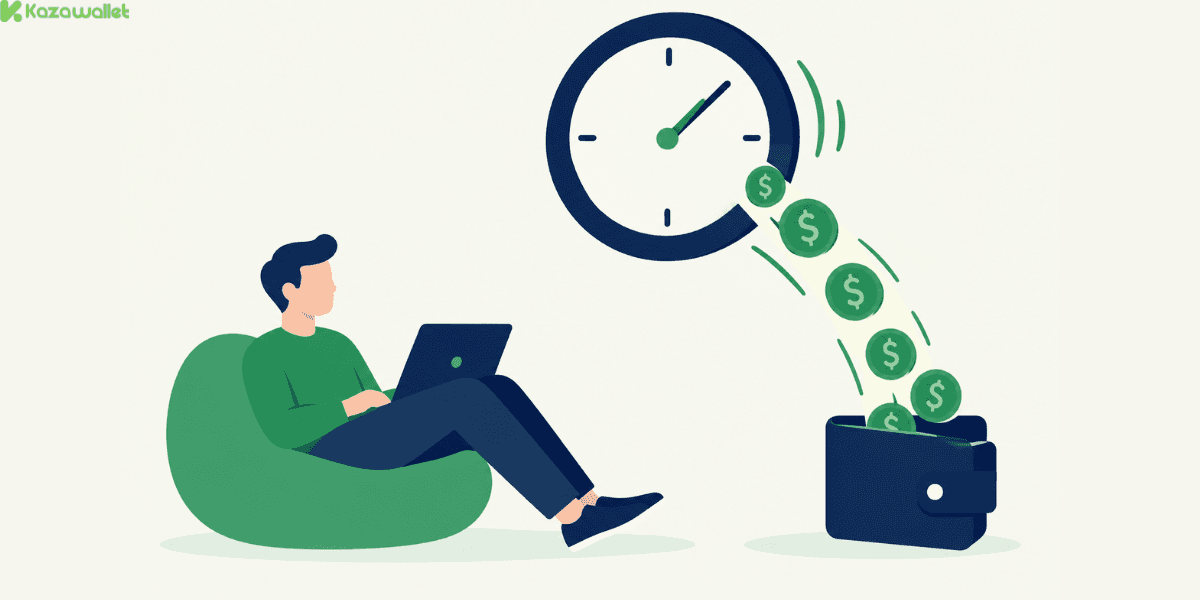
What if your salary moved with the same continuity as your work, and getting paid every second became a reality instead of waiting for it to accumulate over an entire month?
This is no longer a purely theoretical exercise. Parts of it are already becoming a reality in a number of companies and financial systems around the world. In this article, we explore the idea from two angles: is it technically possible? But what happens to our financial behavior and our relationship with money when we actually try it?
Quick Summary
Technically, getting paid every second has become possible, through real-time payroll systems and blockchain-based payment networks, and some major companies already offer daily pay options to their employees.
But the real surprise is on the psychological side: a peer-reviewed study published in the Journal of Consumer Research found that people who get paid more frequently feel wealthier, even when their total monthly income is exactly the same, and that feeling actually drives them to spend more.
The study found that switching from monthly to daily pay could raise a person's annual spending by roughly $260.
In other words, getting paid every second might make you feel richer, while practically making you more prone to spending more, unless you manage this feeling consciously.
Is Getting Paid Every Second Actually Technically Possible?
The short answer: yes, largely, and we're not as far from it as it might seem. Two technical trends are pushing this idea toward reality:
- Real-time payroll systems: modern systems now process attendance and wage data continuously, instead of batching it all together and processing it once a month, which theoretically allows earnings to update moment by moment.
- Blockchain-based payment networks: layer-two networks built on Bitcoin allow for tiny, fraction-of-a-cent payments with near-zero fees, making it technically possible for pay to flow continuously, every second or every minute instead of every two weeks, without the burden of heavy transaction costs.
This trend is no longer purely theoretical. Some major companies, like Walmart and Amazon, along with platforms like Uber, have already started giving employees the option to get paid daily instead of waiting for the usual monthly or biweekly pay cycle, through what's known as Earned Wage Access.
According to data from the US Consumer Financial Protection Bureau, more than 7 million workers used this kind of service to access roughly $22 billion in paycheck advances in a single year alone.
What actually happened when this idea is tested in real life?
To understand the psychological impact of the getting paid every second mechanism and the rapid frequency of wages, researchers did not stop at theoretical questioning, but actually studied how people's behavior changes when they receive their money faster.
In a study published in the peer-reviewed academic journal Journal of Consumer Research, researchers Wendy De La Rosa and Stephanie Tully compared two groups: one paid every two weeks, and another paid every workday.
The results were striking:
- People who were paid more frequently spent noticeably more, even though their total monthly income was exactly identical to the other group.
- The researchers explained this behavior through what they call "Subjective Wealth", a person's internal sense that they have more money, even when their actual income figure hasn't changed at all.
- This effect held even when participants were given the choice to pick their own pay frequency, meaning the difference wasn't just about different types of people opting in, it was the frequency itself driving the behavior.
- By the researchers' calculations, switching from a monthly pay system to a daily one could raise a person's annual spending by roughly $260, more than double what the average American consumer spends annually on books and magazines combined.
- This effect was especially pronounced among lower-income individuals, who typically already feel more financial pressure to begin with.
Does this mean paying salaries instantly is a bad idea?
Not necessarily, but there are two genuinely opposing sides worth weighing:
- The clearest benefit: reduced reliance on expensive short-term payday loans, since a person no longer has to wait until the end of the month to cover an emergency expense, and can instead access a portion of wages they've already earned.
- A documented psychological benefit: according to surveys cited in recent research, 78% of employees said having on-demand access to their pay would make them more loyal to their employer, and 80% said they'd accept a job offer with this option over one that didn't.
- The clearest risk: some earned wage access services charge a small fee on every early withdrawal, and these small fees can stack up dangerously.
According to an analysis published by the World Economic Forum, a worker earning $15 an hour who withdraws part of their pay daily, every day of the week, could end up effectively paying the equivalent of a 428% annual interest rate, worse than the notoriously predatory payday loans it was meant to replace.
How do you benefit from instant pay without falling into its risks?
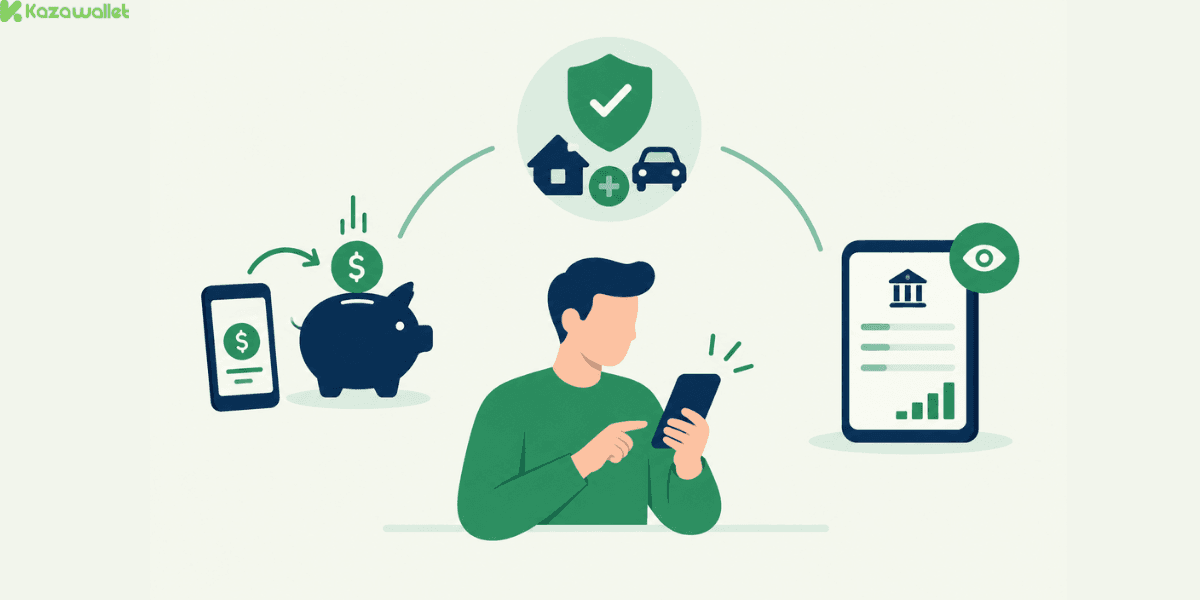
If you're ever given the option to get paid more frequently, whether daily or even instantly, a few simple habits can help you take advantage of that flexibility without sliding into unconscious overspending:
- Automatically move a fixed portion into savings the moment each payment lands, no matter how small, instead of waiting to decide manually at the end of the month.
- Treat instant access as a safety net, not a daily habit, using it only when you genuinely need to cover an emergency expense, not as a regular way to grab extra cash.
- Track your actual balance regularly instead of relying on how wealthy you "feel", because as the research shows, that feeling can be completely misleading even when the real number in your account hasn't changed.
Frequently Asked Questions
Are there companies that actually pay their employees every second today?
Not literally every second yet, but a growing number of major companies now offer daily or on-demand pay options, and continuous payment experiments using blockchain technology are still in their early stages.
Why do people feel wealthier when they get paid more frequently, even with the same income?
Because frequent payments create a psychological sense of greater available money, even when total monthly income is exactly the same as someone paid in one lump sum, an effect known as "subjective wealth."
Is accessing earned wages before the end of the month financially safe?
It depends on the fees tied to the service. If fees are low or nonexistent and the service is used thoughtfully, it can genuinely help. But repeated use of high-fee services can turn into a very expensive cost over the course of a year.
Does getting paid more frequently mean I'll definitely save less?
Not necessarily for certain, but research points to a clear tendency toward increased spending as pay frequency increases, so setting up an automatic savings plan in advance significantly reduces that effect.
In closing
The idea of getting paid every second instead of every month isn't as far-fetched as it first sounds, the technical infrastructure needed for it already exists, and parts of it are already in use at companies around the world.
But the biggest lesson here isn't a technical one, it's psychological: simply changing how often you receive money can change how you feel about it and how you spend it, even when your actual income figure never changes at all.
Understanding that effect is what determines whether this new kind of financial flexibility becomes a genuine benefit for you, or just a subtle psychological trap that pushes you to spend more than you realize.