The digital world we live in operates around the clock: you shop online at dawn and chat with someone on another continent in the middle of the night. So why does your money transfer act like a government employee bound by strict office hours?
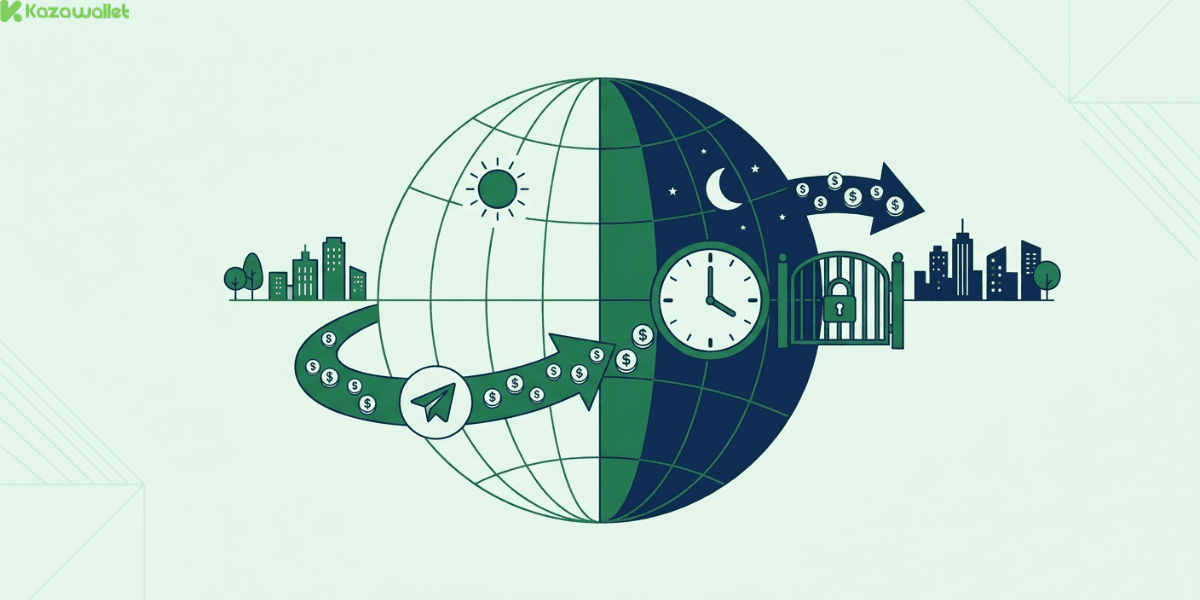
When you send money through the traditional banking system, you run into what is known as the time zone tax, a hidden cost of lost time caused by time zone differences and weekends, which leaves your money stuck in a deep sleep for days.
In this article, we will uncover why your money falls asleep halfway through its journey, and how live funds move continuously while you sleep without stopping for a single second.
Quick Summary (TL;DR)
Money does not actually move around the clock through the traditional banking system. Every country has its own currency settlement system, and these networks operate only during specific working hours and shut down entirely on weekends and public holidays.
When you send a transfer from a country still within its business hours to one whose systems have already closed, or when you miss your bank's daily cut-off time, your transfer enters a sleep state until the next window opens, which could mean waiting through an entire weekend.
This is the time zone tax, not an advertised fee, but a delay cost resulting purely from the mismatch of hours between nations, unlike blockchain-based systems that run 24/7 without any such interruptions.
What Is a Cut-Off Time, and Why Does It Seal Your Transfer's Fate?
Every bank sets a daily deadline called a cut-off time, which is the final window during which a transfer can be sent to process on the same day. Any request arriving after this limit is treated as if it arrived the next day.
Most banks set this deadline between 2:00 PM and 5:00 PM local time.
If you miss the cut-off on a Friday, your transfer doesn't just wait a single day; it stays suspended through the entire weekend because most clearing systems are closed on Saturdays and Sundays. This means a minor delay of a few minutes past the deadline can turn into a 72-hour delay.
International transfers usually have earlier cut-off times than domestic ones because banks require extra time to route transfers through intermediary banks abroad.
How Do Time Zone Differences Turn Into a Real Barrier for Your Transfer? Time Zone Tax
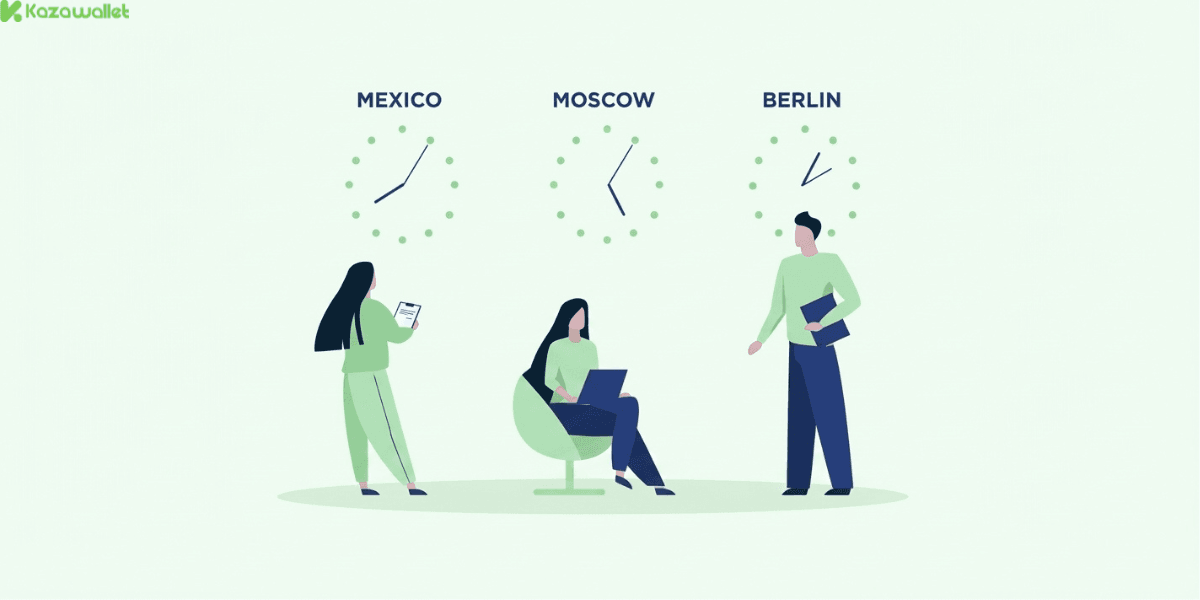
Here is the surprise many people don’t know: even if you send your transfer precisely within your bank’s working hours, you may still hit the reality that the clearing system in the destination country has already closed for the day due to the time zone gap.
Every major currency relies on a national settlement system operating within specific local hours:
Fedwire (US Dollar) closes at 6:00 PM Eastern Time.
TARGET2 (Euro) closes at 6:00 PM Central European Time.
CHAPS (British Pound) closes at 6:00 PM Greenwich Mean Time.
BOJ-NET (Japanese Yen) closes at 4:30 PM Tokyo Time.
A realistic example: If you try to send a Euro payment from the US East Coast, it is impossible for it to settle on the same day through the European TARGET2 system.
This system closes at 6:00 PM Central European Time, which is roughly midday in New York.
In other words, your workday has barely begun, while Europe’s banking workday is ending. Consequently, your transfer automatically waits until the next day, regardless of how fast you sent it from your end.
Why Does Your International Transfer Pass Through Multiple Banks Along the Way?
Part of this delay has nothing to do with time zones directly, but rather with the number of checkpoints your transfer must cross.
International transfers via the SWIFT network typically travel through one or more intermediary banks before reaching their final destination. Each station requires its own time to verify data and pass the transfer along independently of the others.
Each extra intermediary step can add hours, or even a full business day, to the total duration. Generally, data shows that transfers directed toward banking systems less connected to the global network, or toward markets with less developed financial infrastructure, tend to fall on the slower end of a timeline spanning one to five business days.
In Sharp Contrast: How Do Funds Actually Move While You Sleep?

While traditional banks halt operations, the digital world keeps moving. This is where the core value of modern financial technologies comes into play, specifically systems powered by blockchain technology and stablecoins.
These networks don't recognize banking hours, the closing of settlement offices, or weekends. They form an open, global network operating continuously 24 hours a day, 365 days a year, regardless of the local time zone of any party involved.
While you sleep, and when banks have their doors closed for the weekend, transactions on the network handle digital obstacles, execute transfers, and confirm balances in fractions of a second. This is the true meaning of "money that never sleeps."
Even local instant payment systems developed by some countries (like FedNow in the US or Faster Payments in the UK) successfully solve domestic delays, but remain helpless against cross-border transfers trapped in legacy systems.
This leaves decentralized solutions and modern platforms as the only guarantee for uninterrupted fund movement day and night.
What Does This Delay Mean Practically for You?
If you regularly send remittances to family, understanding this timeline has a direct practical impact:
Sending a transfer on a Friday afternoon under the assumption it will arrive within hours actually means waiting until Monday morning.
Knowing your bank's cut-off time helps you plan better, especially ahead of weekends or official holidays in either the sending or receiving country.
Relying on tools built from the ground up for 24/7 operation removes this type of delay from the equation entirely.
How Does a Platform Like Bypass This Hidden Tax?
Since a major share of this delay stems from the structure of traditional banking itself, the practical solution is to use tools unbound by those same restrictions.
A platform like Kazawallet offers a direct solution to keep your funds moving even while you sleep:
Direct conversion to USDT, US Dollars, or your local currency: Without waiting for a specific settlement system to open or a bank cut-off window to pass.
Executing transactions at any time: Whether in the middle of the night, on weekends, or during holidays, without your transaction entering a "sleep" state until the next business day.
Funding a virtual Visa card directly from your balance: Allowing you to spend instantly online instead of waiting for a traditional wire to clear through multiple correspondent banks.
This way, you never have to watch the clock or calculate time zone differences between your country and the recipient's, because the tool itself never sleeps.
Frequently Asked Questions (FAQ)
Is the time zone tax an actual fee deducted from my transfer?
No. The term describes the cost of lost time caused by mismatched business hours across countries, not an advertised or balance-subtracted monetary charge.
Why do transfers delayed over a Friday take even longer?
Because most bank settlement systems do not operate on Saturdays and Sundays. Missing the Friday cut-off leaves your transfer pending through the entire weekend, not just for a single day.
How can money move continuously while I sleep without stopping?
By using financial networks built on blockchain technology and stablecoin assets, which rely on software code rather than human working hours or intermediary banks, allowing them to run around the clock.
Can this delay be avoided entirely?
Yes, by relying on modern financial tools and platforms like Kazawallet that enable instant transfers and purchases at any moment, bypassing legacy banking bottlenecks.
In Conclusion
Ultimately, it is no longer acceptable for your funds to remain hostage to banking hours or weekend closures in a digital world that never sleeps. Whether you are managing family obligations or personal transactions, understanding why traditional transfers stall opens your eyes to the efficiency of digital alternatives.
Always remember: while you close your eyes to sleep, your money should be free to move securely and dynamically, rather than waiting for a new business day to dawn.